• About

Elmer Verigin

~ My Journey through life Just stories and writings of Elmer Verigin

Elmer Verigin

Category Archives: People

THE STORY ABOUT NICKOLAS SAMSON

17 Sunday Jul 2022

Posted by everigin in People

≈ Leave a comment

I was fortunate to know Ruby from the “Frank and Ruby Konken Family” of many Russian songs. I want to thank Ruby for sharing her story about her paternal father. Special thanks to members of Ruby’s family that assisted with editing and creating the final version. Ruby provided acceptance to post this story on my blog, today, July 17, 2022.

the-story-about-nickolas-samsonDownload
family-tree-of-nickolas-samsonDownload

THE STONEBOAT CAPTAIN

07 Tuesday Nov 2017

Posted by everigin in People

≈ 3 Comments

THE STONEBOAT CAPTAIN

It was 1983 and I was doing intermittent Project Management work for Brian McMahon who was in charge of the Travel and Industry Subsidiary Agreement (TIDSA), a granting agency for the Government of British Columbia, Ministry of Tourism. This program was to stimulate the Travel Industry and was funded by a partnership of the Federal and Provincial Governments.

Whenever Brian found any of the funded projects were not performing according to an agreed contract schedule, he would access my services and I acted as a Special Project Manager. I would go into a community and investigate what the problems were and report to Brian whether the project would succeed and / or what actions were necessary to make it all happen as per the contract with that Municipality.

I came home, to Castlegar, B.C. from an exhausting business trip, to enjoy my family and I was on the floor playing with my children and enjoying the TGIF day and looking forward to the weekend when the phone rang.

“Elmer, is that you?” and it was Brian on the other end. “What are you doing tomorrow?

“Well I certainly have my share of things to do around the yard as it is fall you know,” I responded.

“You and I are having a meeting in Whitehorse, YT., and tomorrow evening about Port Alberni. You will take the plane out of Castlegar tomorrow and meet the plane to Whitehorse in Vancouver which should reach Whitehorse by 7:00 P.M. I will meet you at the airport,” he advised matter-of-factly like as if he were telling me to sit down for dinner.

“You must be joking” I pleaded. ‘How can we discuss the Port Alberni development in Whitehorse when I don’t even know what it is that we are talking about?”

“Besides there are drawings required and other documents; it is not a practical process, Brian,” I pointed out, hoping he would agree and I could just go back to planning my weekend home with my family.

“The plans and documentation will be on the same plane with you when you get here”, Brian advised.

“There is no way around this as you will need to organize a meeting with the Port Alberni Harbor Front Committee on Monday night. So quit stalling and pack your suitcase,” he ended the telecon.

“What’s going on?” Marilyn looked at me with disbelieving eyes, suspecting that her husband was going away again and the weekend preparations with family were over.

I tried explaining as best that I could but I really had very little to go on except it was obviously a project in Port Alberni, B.C., and that I had to go to Whitehorse Y.T., to get briefed by Brian.

“Elmer, this is ridiculous” she opined and shuffled down the hallway to get started on my suitcase.

“How long do I pack for?” was the next sarcastic remark.

“Probably, Wednesday as I have to be home for a few meetings in Trail,” as I started my thought process as to what this thing at Port Alberni was all about and what I may have to do to get it on track.

Well, Brian was smiling at the Whitehorse Airport as I got into the Terminal, “you travel light, I see”

“Thanks for warning me as to where I would have to go, otherwise I would have packed a tent and camping gear,” I sniped.

“We better remember to pick up the documents at the express baggage” Brian noted. Sure enough there was a small roll labeled HOLD FOR PICKUP and away we went into Whitehorse.

Brian was a very efficient Administrator and had a room already booked for me in the hotel and suggested “I’ll see you in 208 as soon as you get yourself checked in. We will get the orientation over with before we go to eat”.

“That’s all you got” I commented at the one page schematic of the Port Alberni Harbor Front Development that had Hotson Architects title block.

“Well the grant is for $2.8 million and there appears to be some disagreement not only amongst the Committee but also between the Committee and the Architect,” Brian admitted. “The agreement is that the project must be complete and funded by June 30 next year. If they cannot execute, the grant returns to the Tourism Ministry”.

“Hey, Brian, this is October and there are no drawings, unless I am missing something, how do you expect drawing completion, tenders to be called and project completion by June 30? Don’t be ridiculous!” I expounded rather emphatically.

“So why did I have you come up here? You are to meet with this Committee on Monday afternoon and determine what issues they may have and report back to me by Friday with your opinion as to whether this project is salvageable”, Brian just carried on as was his style.

“Is the Committee aware that I am coming?” was my obvious question.

“No! You will make contact with them once you are in Port Alberni” he answered.

“So why don’t we just go there together?” seemed like an obvious suggestion as I groped with an understanding of this impending challenge.

“I will be 200 miles into the hinterland inspecting a fly-in Hunting and Fishing Lodge and then I will be visiting some other potential funding sites and I will not be available for any contact till Friday” and with that Brian announced that he was very hungry and we should go and eat before everything shut down for the night

Brian was a good host and we spent the evening watching a Hypnotist performing his feats on an unsuspecting audience. The next day I left for Vancouver knowing that there was absolutely no way I could contact Brian until Friday when he came out of wilderness.

At 9:00 A.M. Monday, I was in Hotson Architects offices on Howe Street, meeting with a very surprised Hotson who refused to provide me with any additional plans than what Brian already gave me and was even less communicative about the status of the project. He admitted, though, that he was having difficulty determining what the Port Alberni Committee wanted from this project. Hotson Architects were the Architects for the very successful harbor development on Granville Island in Vancouver. We concluded the short meeting with an understanding that he would only release information when he had direction from his client.

“I will be back tomorrow morning” I advised as I left to get on with the rest of my investigative process.

I had never been to Port Alberni and never to Nanaimo which was the local airport on my way to Port Alberni from Vancouver. A rental car and a beautiful drive brought me into unfamiliar surroundings within the City of Port Alberni.

I decided that City Hall was my best bet and asked to speak to the City Manager who sat there in disbelief as I outlined my reasons for being in Port Alberni.

“Do you have anything from Brian McMahon? He wanted to ensure that he had this all straight before he called the R.C.M.P.

“No, but I do have this plan he gave me and his address and label is on it”, as I offered same to him for his inquisitive review.

“You realize that is an extraordinary situation that you describe,” he commented. “I will need to have an emergency meeting with the Committee in order to provide you with any more information as this is entirely beyond my authority.”

“May we meet this afternoon?” I responded. “We don’t have too much time and I need to report to Brian this Friday.”

“I will make the calls to the Committee and see what can be done by 4:00 P.M. this afternoon in the Council Chambers,” he reluctantly advised.

I decided that this was a good time to inspect the site for the project and I was not surprised that it was going to be a challenge to not only complete the project on schedule but to also get the site prepared for this development. It would take a considerable amount of cooperation by everyone and all agencies to get the documents for tender into place. It would take a very organized General Contractor with experience in “tight scheduling” to get all this done by June 30.

What am I getting myself into, I mused?

As I walked into the room and counted at least ten (10) committee members in attendance which I am meeting for the first time, I could not miss noting that there was a great deal of disgust on their faces and a readiness to “Tar and Feather and roll out on a rail” this Dude that hailed from Trail, B.C., that was attempting to deride Port Alberni’s ticket to Tourism.

The meeting opened and they all stared at me as I explained the TIDSA agreement that they were signatory to and the requirements to complete on time and budget. I referred to the clause that permitted the Ministry to employ a “Special Project Manager” should there be any concern and / or doubt that completion may not be met.

“I am He,” I announced.

“So where is Brian McMahon?” was the question from the Mayor.

“I am sure you have already tried calling him and were unsuccessful,” I commented. “He is in the far reaches of the Yukon right now and will return on Friday when he expects me to provide my assessment.

“We don’t have much time,” I added.

There was an interesting man at the end of the table that just glared at me the entire time and I tried to remember who he was from the introductions and I now remembered his card as being the Head of the Harbor Commission.

“This is not going to be easy”, I tried to reassure myself as I presented the false presence of confidence to a very antagonistic group who still could not believe that all this was happening to them.

“Let’s start with Hotson Architects”, I instructed. “You need to tell him what you want in on this project so that he can develop the drawings for tender, immediately”.

“He will not do what we want,” they confided. “We are in disagreement with him and his ideas.”

“You will go over his proposal right now and let him know what your parameters will be,” I made it clear as to how the process would unfold. “I will be in his office tomorrow morning to get an update and a copy of his plans to date.”

“Do we want the “Harbor Quay” to get developed or do we just “cash in” is the question here,” I ended my presentation to the Committee. “Are we ready for the challenge?”

“Yes!”

I could feel the daggers being thrown into my back as I left the room and heard the animated discussion pick up.

There were friends in Port Alberni that I knew and I called them up as it was too late to get back to Vancouver. These friends were very much part of the community and it was good to get an appreciation of all the Committee Members and what they represented. This all helped considerably in my understanding of how I could possibly make all this happen.

I dropped into Hotson Architects the next day and it appeared that everyone was going to cooperate and so a meeting was set for the following week in Port Alberni, when Brian could attend as well.

It was that meeting that I noted that the Committee Member from the Harbor Commission seemed to passively study me the entire meeting as the Committee set up a schedule that included approval of drawings and going to tender, etc., the normal project process so that I could recommend to Brian that we were now “on track”.

After the meeting the Harbor Commissioner walked up to me and invited me to see his Harbor operation. I kept wondering how this was to “unfold” but I readily agreed to follow his vehicle down to the Harbor.

I went after him up the stairs and into the Harbor Master’s office. There behind the desk sat a smiling man with an identity plate in front of him that said:

KEN FERTUCK

HARBORMASTER

The Harbor Commissioner asked “do you know this man?”

“The only Ken Fertuck that I know was a classmate of mine in Pelly, Saskatchewan” I blubbered, not believing my eyes and twenty-five (25) years made recognition difficult.

“The same”, came the response from the man behind the desk, smiling even more now.

“Well how in the blazes did a kid from the prairies get a job as Harbormaster on the coast,” I questioned.

“Well, I just wrote down on my resume, that I was a Stone-boat Captain in Saskatchewan and they considered that to be all the experience necessary for this job”, as we all laughed uncontrollably.

It is necessary to explain to those of you who are not “Stubble-Jumpers”, that a stone-boat is approximately 6 feet x about 8 or 10 feet long built with 2 inch to 4 inch wood planks laid on two (2) 8 inch x 8 inch wood runners that is pulled behind a team of horses. Its uses on the farm are multiple with following common adaptations:

  • Pick up stones from a field and transport to a dumping area
  • A similar function with roots that are common after clearing new land as they are piled to dry and burn thereafter
  • Manure from “cleaning” a barn to a disposal site usually on an open field for use to fertilize
  • Countless other functions that are common to the operation of a “mixed” farm operation
  • Sometimes for recreational purposes as joyriding over snow

Being a “Captain” of a Stoneboat would be similar to being a “King of the Castle” as children would play. The largest body of water adjacent to Pelly was at best a slough and a larger swamp. Both of these “bodies of water” were used by youths to float a makeshift raft of loosely tied logs and pushed around with a pole in the spring when there was water. Everyone from the Prairies knows that having a nickname of “Stone-boat Captain” is quite similar to being a “Stubble-Jumper”, any such reference would clearly indicate heritage from the Prairie Provinces.

Then the Harbor Commissioner explained how he had returned from that first meeting with some “jerk” called Elmer Verigin from Trail, B.C. that totally insulted the intelligence of the Committee who had worked so hard to get the Harbor Quay Development going and now suggested that he has taking over.

Ken asked him where this Elmer was from as he only knew one Elmer Verigin and he was from Pelly, Saskatchewan. Perhaps this guy should be given a chance to prove himself.

Well we spent a great time after, reminiscing about old times and places and I found out how Ken came right to Port Alberni in 1956 and worked himself to the top by starting from the bottom “on the docks.”

The epilogue is that Ken still lives in Port Alberni to this day but unfortunately, he had a stroke and I understand that he is dealing with a handicap quite well. The project did get completed by June 30 as required with a surplus budget that was utilized for other purposes on the Harbor Front Project. The designs by Hotson Architects were in keeping with their creative ability on Granville Island in Vancouver. The Contractors outdid themselves in quality and performance. My on site Clerk of Works was a God send that ensured quality control. The Committee was an excellent group to work with.

The breakfasts in that tiny Diner near the waterfront are still a mouth-watering memory that will be hard to forget.

My purpose was successfully exercised in Port Alberni.

Brian McMahon and I made contact from time to time, later, and he was able to secure $1.3 million in establishing the Doukhobor Village in Castlegar B.C. as a destination point tourist attraction when disagreement of local politicians forced the funding to move elsewhere. That will be the subject of another story.

++++++++++++++++++++++End++++++++++++++++++++++++++++

Posted by EWV November o7, 2017 from EWV Archived Files for use in his Adventures Story being composed for his family

GRANDVIEW SENIORS SPEAK FROM THE LEDGE (The Facts About Kootenay Columbia Seniors Housing Cooperative)

21 Monday Mar 2016

Posted by everigin in People

≈ 2 Comments

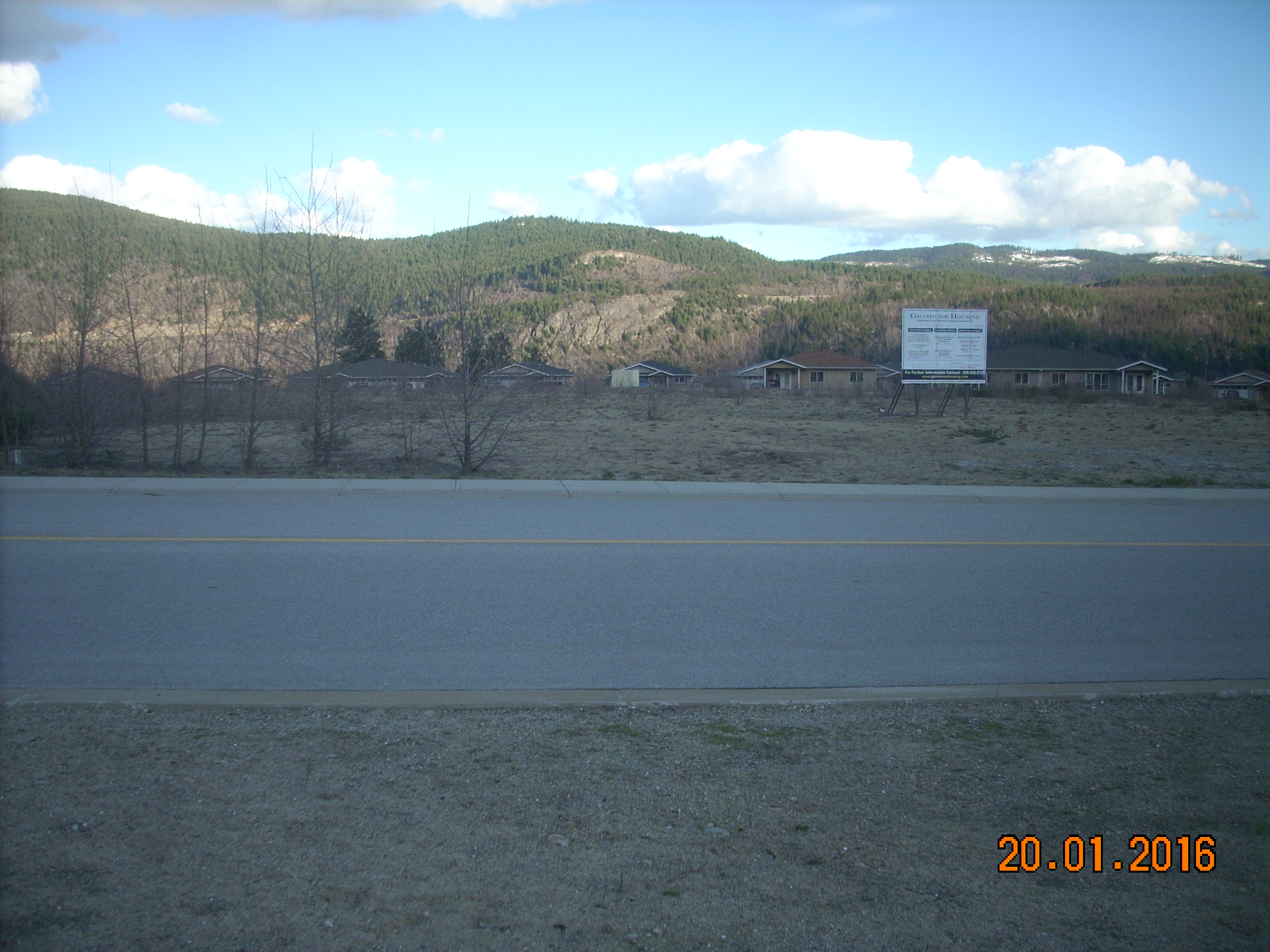
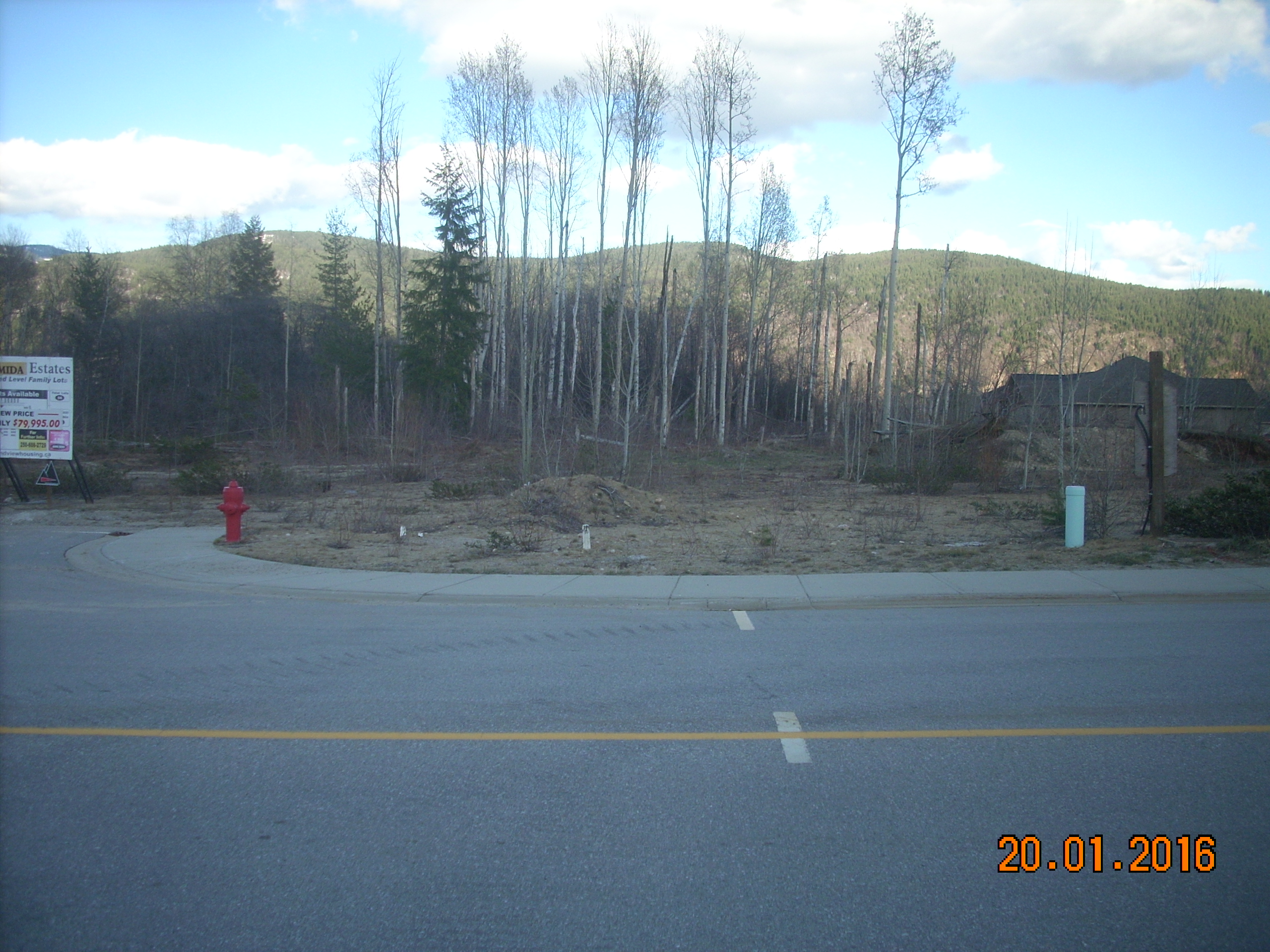
Grandview Drive Travelling Nortrh

This all takes place on location bounded by 16th Avenue and 4200 Grandview Drive, Castlegar, British Columbia, Canada.

There are many opinions and conclusions as to what caused the failure of a beautiful seniors housing dream conceived by a group of seniors in Castlegar, B.C.

The intent of this blog entry is to provide information for anyone who may be researching cooperative movements with the purpose of designing and delivering seniors housing. This could also assist those groups who may be researching a housing project to become better prepared for the hurdles that may arise in their path to a successful project.

The various levels of government might take time to consider removing hurdles that encumber development by “grass roots” community groups who try to be part of a seniors housing solution. This could contribute to a decrease in the current seniors housing crisis

This action is designed to provide the reader with a background so that an independent opinion can be developed.

  1. The Idea
    1. Members of the Doukhobor Cultural Association (DCA) were aging
    2. The DCA was involved with completion of several successful community seniors projects
    3. Parkside Villa (26 units) in Grand Forks, B.C.
    4. Rosewood Manor (10 units) in Castlegar, B.C.
    5. White Birch Manor (48 units) in Delta, B.C.
    6. Why not a seniors project where the DCA could be participants and share with the public?
    7. In 2002, a two (2) day retreat at Blue Lake Centre ended with all members present agreeing that a feasibility study should take place in Castlegar, B.C.
    8. The main objectives would include:
      1. Affordability
      2. Access to seniors care with fewer restrictions that currently exist with Interior Health Authority
      3. Optimum design for seniors health and mobility
      4. Possibility to utilize project development profits that would lower costs of delivering care when that need would arise
      5. Benefits from the project to be shared with friends and neighbour


  2. Preliminary Feasibility Study No. 1
    1. A Committee of five (5) members was formed
    2. The Committee asked one of its members, a Professional Engineer, to report as Consultant
    3. Twenty (20) sites were investigated
    4. Site basic characteristics and requirements:
      1. Must be adjacent to all municipal services
      2. Design suitable to a campus style seniors complex consisting of Supportive/Assisted Living and Residential Care
      3. Recommended economic total size must be in the range of 160 to 250 units as established by successful private developments e.g., Hawthorne Park, in Kelowna, B,C.
      4. This ideal design would require five (5) acres minimum size
      5. Likely initial need for “seniors friendly” independent units as a starter project that would assist in financing the large basic infrastructure costs
      6. Recommended that housing lots be available for sale to the public which would also assist in financing the infrastructure
      7. It was then agreed that a preferred site size must be at least ten (10) acres
    5. Three (3) sites were short-listed:
      1. Centennial Park at the junction of the Kootenay and Columbia Rivers was the recommendation by Consultant and Committee
        1. Undeveloped park area exceeded thirty (30) acres
        2. Met all basic other criteria
        3. City Council recommended that the site be reconsidered as:
          1. Zoning from park to a higher zoning not usually successful
          2. Too many legal easements and site restrictions by external agencies including BC Hydro, First Nations, etc.
          3. Consultant and Committee recommended against further study on this site
      2. The Ferraro property in South Castlegar (the Grandview Project now) was second choice
        1. Property met basic criteria
        2. The forty (40) acre size exceeded the basic requirements
        3. Additional property could add to the revenues from additional development
        4. Purchase price at $10,000 per acre was very acceptable
        5. Consultant and Committee recommended further study on this site
      3. The ball park adjacent to the Castlegar Recreation Complex was suggested by the City of Castlegar CAO
        1. Closer to centre of town and services than the Ferraro site
        2. Size did not meet basic committee requirements
        3. Recreation Committee would not likely agree to compromise a site designated as recreation that would continue with future City growth
        4. Consultant and Committee recommended against further study on this site
  3. The Project Name
    1. British Columbia Housing Manager responsible for the Kootenay Region recommended that the DCA look at a successful seniors housing project in Kamloops that used a cooperative model where the seniors financed their own units
    2. The cooperative was the North Kamloops Seniors Housing Cooperative (NKSHC)
    3. Twenty (20) members of the DCA visited the site of the project, Cottonwood, and met with the Founders
    4. The constitution, plans and operating budgets were copied by the Founders and “loaned” for KCSHC use
    5. The DCA decided that using a cooperative model would be recommended for the final feasibility study
    6. A naming contest took place and Kootenay Columbia Seniors Housing Cooperative (KCSHC) was the result
  4.  Concept Creation
    1. The DCA decided to formalize the project by preparing a concept
    2. The decision was to allocate a maximum of just under $50,000 to this effort
    3. Elmer Verigin, as Consultant, would continue to report to the Committee and develop a concept:
    4. Ferraro family agreed to a $1,000 deposit on the 40 acre parcel for $400,000 purchase price
      1. Subject to feasibility and financing
    5. Lubor Trubka, Architects from Vancouver were engaged to prepare a site plan that would meet the economic basic requirements specified in (item 2.4 see above)
    6. Marwest Contracting Ltd and WSA Engineering were contacted to prepare a preliminary cost estimate on a design/build basis for infrastructure
    7. Elmer Verigin prepared an overall project estimate and possible costing of individual lots to cover infrastructure as well as projected final housing costs
    8. The DCA proceeded to register the KCSHC along with the appropriate documentation with a lawyer from Kamloops recommended by the NKSHC who was familiar with cooperatives
    9. It was agreed that the individual unit memberships would have a fee of $250
    10. Seventeen (17) members of the DCA took out the first unit memberships
    11. Voting power would equal one vote per unit membership
    12. The project was ready for public presentation
  5.  Society Acceptance
    1. A public meeting was called in September 2005 with the Architect and others available to answer basic questions
    2. About 100 people attended
    3. Memberships were sold and membership rose to just under 50 units.
    4. Subsequent meetings established an elected Board and Committees from the rising membership which included:
      1. Board of Directors
      2. Building Committee
      3. Rules and Regulations Committee
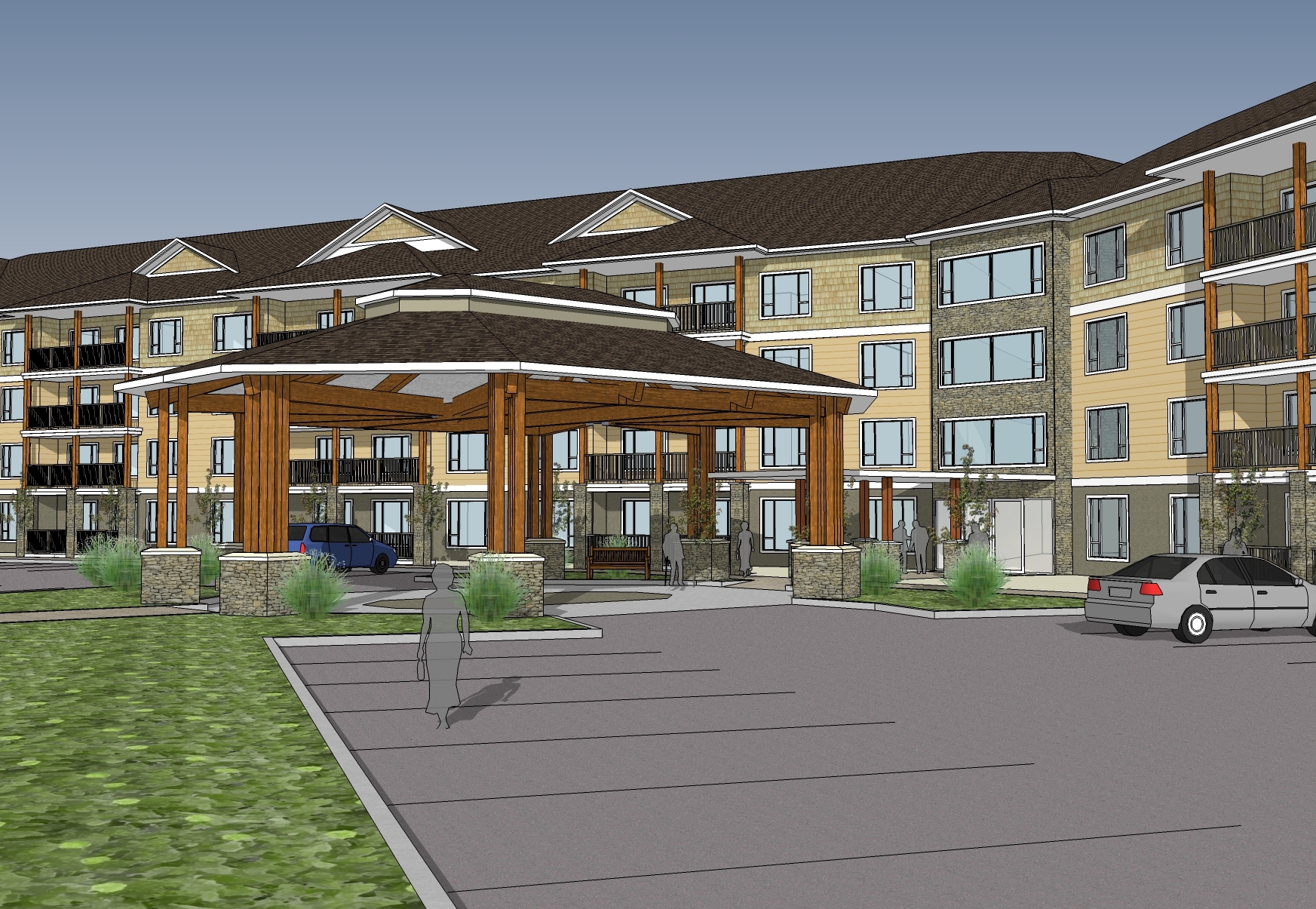
      4. Chateau Grandview (originally Grandview Manor) Committee
      5. Grants and Finance Committee
      6. Landscape Committee
      7. Governance Rules were established
      8. Committees responsible in each area must report their recommendations to the Board. Minutes are to be recorded at each meeting
      9. The Board then makes a recommendation to the membership
      10. All members are to be invited to monthly membership meetings consider each Board recommendation with a final decision taking place
      11. Minutes are recorded at each meeting and distributed to the membership
      12. Committee then takes action
      13. All financial transactions must be approved by the Board
      14. The Treasurer and one signing officer to sign all cheques
      15. Each membership meeting is to receive a financial report
      16. Maximum individual expenditure (within approved budget) that can be approved by the Board is $50,000. All other expenses to be approved by membership
  6. Decision on Land Purchase Phase I (40 acres)
    1. Option to Purchase had a time limit of May 2006
    2. Search for project financing included:
      1. Local credit unions
      2. BC Housing
      3. Columbia Basin Trust
    3. All refused to loan and/or fund the land portion without prior consideration of the total project
      1. Using seniors RRSPs and similar investments was not acceptable collateral for a loan
    4. A membership meeting was called to consider action to be taken
    5. The Consultant recommended that the project be abandoned due to financing challenges
    6. Members discussed action and considered that members put up cash to purchase land
    7. The Consultant advised that a total of $450,000 would have to be raised for Land Title and legal fees
      1. Further advice included no final project feasibility at this time
      2. KCSHC had no formal plan on how to proceed to project completion
    8. The membership decided to proceed against the Consultant’s advice
    9. 15 members volunteered to raise funds at $30,000 each
      1. Security would be by a Loan Agreement as a First Mortgage on the land
      2. See Loan Agreement 12.1.2
    10. The Consultant proceeded with the membership directive to secure the land purchase
  7. A Castlegar Market Study
    1. Prepared by Kate Mancer, a respected consultant in this field, of InSite Housing, Hospitality, and Health Services Inc. The following excerpt is taken from the formal report dated June 02, 2006: 
      1. The KCSHC should focus on housing for independent seniors as Phase One of its planned development for the following reasons:
      2. “…..Executive Summary…..Conclusions and Recommendations
        1. The primary target market for independent seniors housing is seniors between the ages of 55 and 74; the primary target market for supportive housing projects is non-family households over the age of 75, and the primary target market for residential care facilities is non-family households over the agre of 85.
        2. The greatest growth among senior’s population in Castlegar market area over the next 15 years will be the younger age groups – 55 to 74. That group will increase by 966 people between now and 2021 while the 75+ group will increase by 406 people
        3. Although seniors as a whole prefer to stay where they are, younger seniors are about 50% more mobile than older seniors.
        4. Non-family owner households over the age of 75 in the market area have relatively low incomes – an average of $19,305. Even after the sale of a house these households would face affordability challenges vis-a-vis the cost of supportive housing. The current rent for a studio apartment with one meal is over $1,400 per month.
        5. Although Castlewood is full and has a waiting list, the depth of the market for supportive housing is worrisome in light of standard saturation analysis and in light of low incomes of the primary target market
        6. Younger households have significantly higher incomes. One family owner households with a head between the ages of 55 ND 64 and 65 to 74 have an average incomes of $66,753 and $43,961 respectively, before the sale of houses.
          1. Escalating construction costs will result in higher rents and selling prices for all types of senior’s housing and health care projects, meaning the impact for the unsubsidized supportive market.
          2. Until Grandview Heights becomes a more established community and services develop around the project, its location will be more appropriate for younger and more independent seniors than older frailer seniors.
          3. The campus nature of Grandview Heights becomes will attract younger senior who might otherwise decide not to move until much later in their lives. Seniors younger than 75 or 80 are more likely to move to a housing project that is part of a campus than to a free-standing project.
          4. Research indicates that younger seniors prefer to own rather than rent. A life lease or equity coop arrangement for Grandview Heights make sense not only from marketing and administrative (control over occupancy) points of view but also from a viability point of view (i.e. access to capital) Because of general unfamiliarity with these tenure types, communication with future residents needs to be carefully planned and should begin as soon as possible. We are assuming that consumers in Castlegar will respond positively to a development of this nature but there is really no way of knowing for sure until the consumers are approached directly. It is our experience with the life lease concept that once consumers understand it, they like it.
        7. Golden Life Management has been very aggressive and very successful in the Kootenays; however, a project sponsored by KCSHC would have a marketing advantage relative to the Golden Life projects because of its campus nature, its non-profit nature, and (potentially at least) its tenure arrangements.
        8. he addition of a supportive housing / assisted living component in 10 years (more or less, depending on circumstances) would be the next logical development followed by a licensed care facility…….”
  8. Based on the above recommendations the KCSHC continued with:
    1. The developing and marketing of 55 Grandview Heights units and 56 residential lots to raise the capital necessary to fund the infrastructure
    2. Starting a process to develop 61 units of Supportive Living in the Chateau Grandview
  9. Establish Mission Statement
    1. The KCSHC membership created the following:
      1. Identity: “The Kootenay Columbia Seniors Housing Cooperative (KCSHC) is a Not-For-Profit Housing development catering to seniors seeking to live the rest of their lives in a self-governed community”
      2. KCSHC Backyard Social Function
      3. Vision: “Seniors living for life in a cooperative, supportive housing community”
      4. KCSHC Boston Tea Party
      5. Mission: “Our mission is to satisfy the needs of each individual member by creating homes where they will live independently and by establishing a campus-style health facility where our members may choose to live in an environment which sustains quality living.
    2. The cooperative will use prudent business practices to ensure our members receive the best possible housing and quality care services for the best possible price with a Life Lease Model”
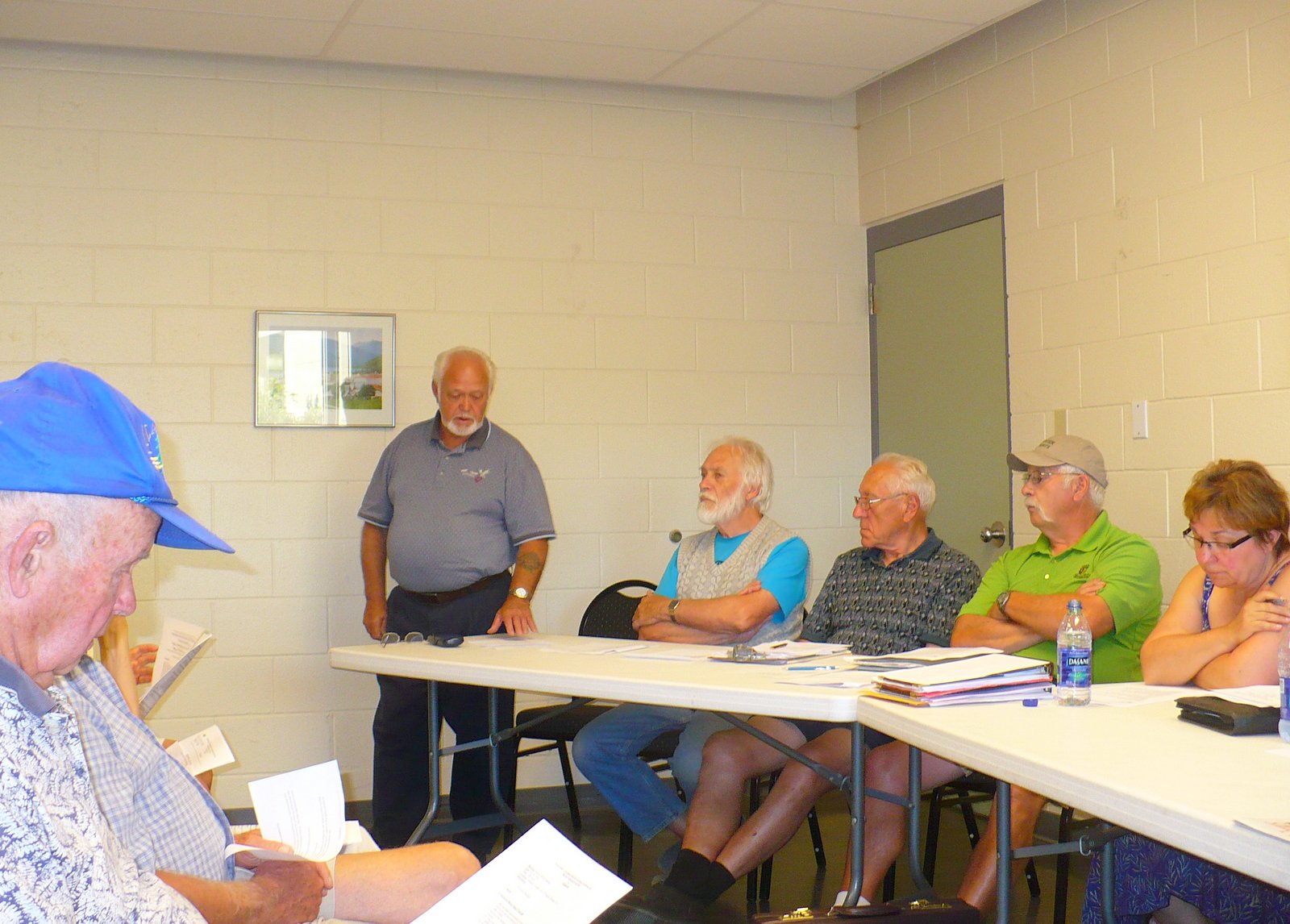
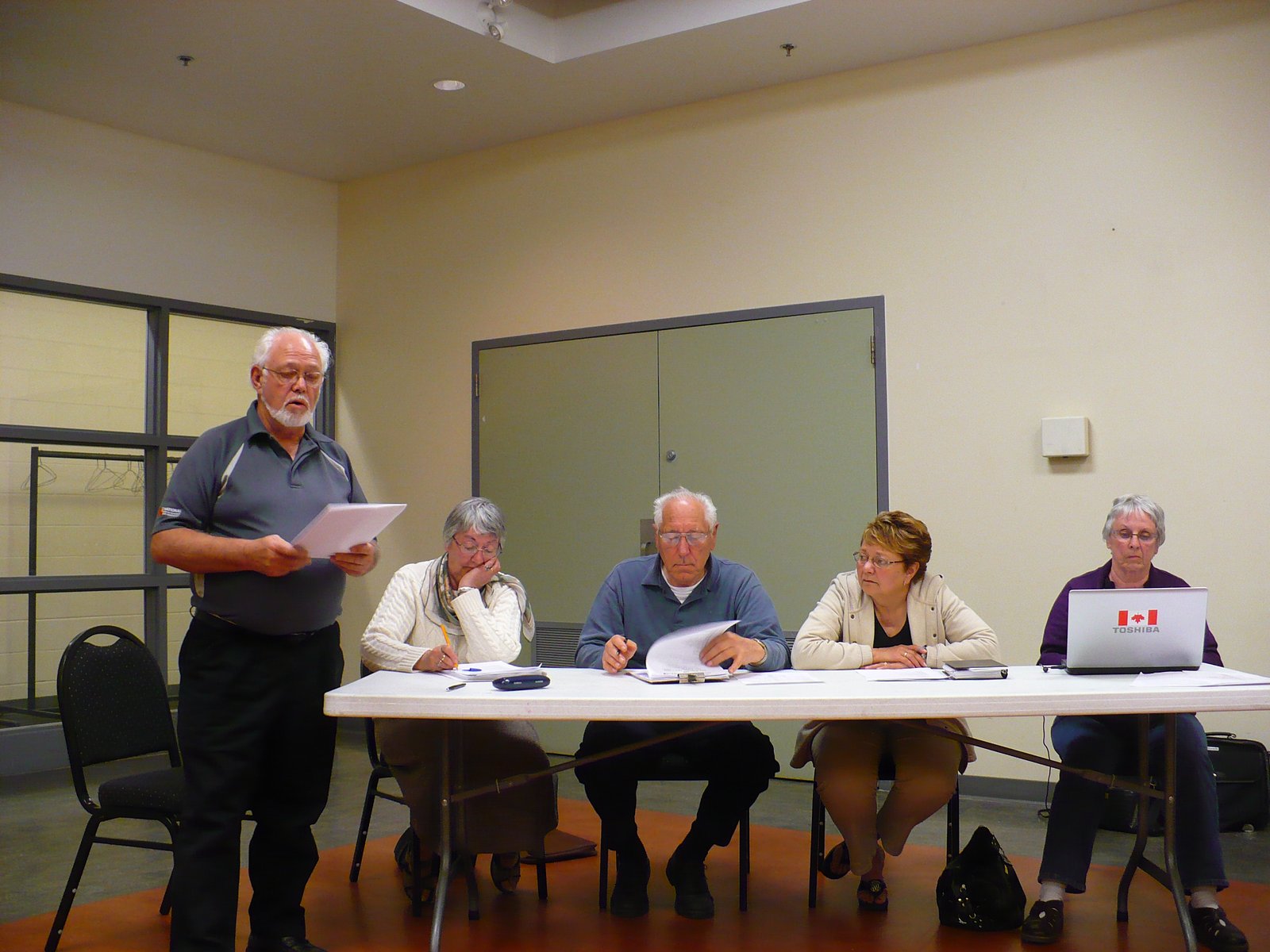
    3. KCSHC Directors Called Meetings and Some Members Came
  10. Search for Public Financing Support
    1. Columbia Basin Trust (CBT)
      1. Initial meetings indicated that there was a willingness to participate with the Grandview Manor (Campus Seniors) portion under submission of specific project,
      2. Quotation from CBT letter dated December 20, 2005 “Funding of seniors Care Complex…
        1. “CBT would be pleased to review a more comprehensive proposal to participate as an equitable partner in the construction of a 117 unit care facility…..”
      3. At a subsequent meeting with the Mayor, MLA and MP present the following is an excerpt from the notes taken by Elaine Whitehead, Assistant to Katrina Conroy MLA and dated February 21, 2008:“… Comments by CBT: 
        1. Good concept and a great idea but CBT can’t get involved other than to assist with getting more grant money for up to 10K inadvertently through the RDCK that CBT actually gives them……….made it clear they cannot get involved. Went through explaining how trust works and what their investment mean. Their lawyers would perceive this is a conflict of interest because they have invested in Castlewood and Grandview would be in competition. They cannot invest in a facility that would compete with one of their investments and their lawyers would be sure to inform them as such……”
        2. No CBT support was available
    2. Canada Mortgage and Housing Corporation (CMHC)
      1. CMHC website indicated support for cooperative housing projects
      2. Feasibility funding could be available as a loan / grant
      3. Support would come as a guarantee of a financing loan
      4. Upon actual application to guarantee interim financing for Chateau Grandview by:
        1. Bank of Montreal
        2. Royal Bank
        3. Western Canadian Bank
      5. Refused to interim finance unless loan was a final for a rental project
      6. No support was available
    3. British Columbia Housing (BCH)
      1. Requirements of BCH had changed from DCA previous project experience
      2. Project must have a significant municipal financial involvement
        1. City of Castlegar was not interested
      3. As a result no support would be available
  11. Search for Grants and other external funding
    1. DCA Initial Funding $50,000
      1. (See 4.b)
    2. Columbia Basin Trust
      1. Grant of $30,000 was provided in July 2008
        1. Money was used for feasibility study for Chateau Grandview
        2. Derek Murphy was engaged to do the study
      2. Grant of $3,930 was provided June 10, 2010
        1. Money was used for Geotesting for Chateau Grandview
    3. Real Estate Foundation (REF)
      1. A grant application was submitted
      2. Was recommended by the Executive Director
      3. Refused by the REF Board
    4. Kootenay Savings Foundation
      1. Grant of $30,000 was provided December 14, 2009
      2. Money was used for Chateau Grandview development purposes
    5. Heritage Savings Foundation
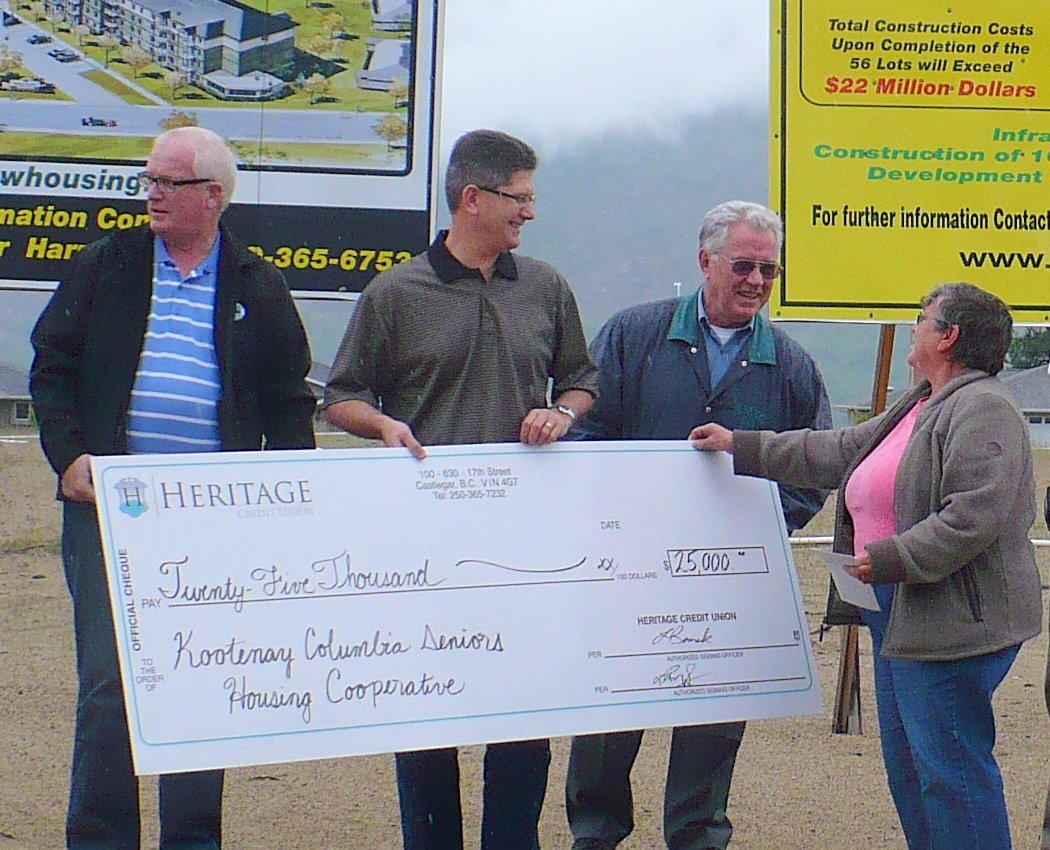
      1. Grant of $25,000 was provided January 26, 2010
      2. KCSHC HCU Donation
      3. Money was used for Chateau Grandview development purposes
    6. Canada Mortgage and Housing Corporation
      1. Grant of $50,000 was provided in 2008
      2. Grant of $15,000 was provided September 06, 2011
      3. Money was used to develop three (3) Contractor formal design/build proposals for Chateau Grandview
    7. Cooperatives Group Limited
      1. Grant of $15,000 was provided May 24, 2011
      2. Grant was used for advertising campaign for Chateau Grandview
    8. Mining gravel deposits on Lot 59
      1. The future site of Phase II Residential Lots was sited over a very deep overburden of clean gravel that could reach about 30 meters
      2. KCSHC had considered mining this gravel in advance of development to raise funds for infrastructure costs
      3. The Building Committee and Directors opted to develop the site over existing grades balancing cuts and fills to current levels
        1. Perhaps delaying the project and operate a gravel mining project may have been a viable option???
        2. A rough calculation would yield some $6.5 million at $1.50 per m3 but that would take many years as no local Purchaser / User could store that much aggregate economically
        3. The final conclusion was that this may not be a viable plan
      4. After the Phase I infrastructure was completed, it became obvious that site grading of Lot 59 would uncover a substantial amount of gravel
      5. The decision was made to market this gravel and about $50,000 was raised for operating expenses
  12. Membership Loans Financing
    1. This came unsolicited as a result of a motion made and passed at that meeting (see 6.9 above)
    2. Loans Agreements were prepared by KCSHC Legal Counsel
      1. Loan agreement specifically covered that the signatory seek independent advice
      2. Initialing that clause was required
      3. Five (5) year term
      4. Interest rate noted
      5. Trustees (3) elected to ensure that security was placed
      6. More loans came in than required to fill the initial needs
    3. Ensuing Loans
      1. Used same model as in item 12.2 above
      2. Unsolicited but membership was aware that financing by members was the likely approach to the project success
      3. Members would call the Project Manager who received the applications
      4. Director signing officers executed the loans
      5. Members may opt to:
        1. Future purchase of a Residential Lot
        2. Future purchase of a Grandview Housing Lot
        3. Final security would be a registered legal title but interim security would be a first mortgage on the unsubdivided initial property
        4. Money to be used for land purchase or infrastructure construction
        5. Interest from the membership was very active at this time
    4. Loans for 16th Avenue Construction
      1. Estimated cost was $2 million
      2. Negotiations with the City of Castlegar
        1. CoC advised that there were still no DCC Funds available
        2. Excerpt from CoC Annual report December 31, 2007, page 24, Exhibit 3 lists “….Reserve Fund for Development Cost Charges amount $1,174,700……”
        3. Advice was that they would make a “special funding” of $1 million if KCSHC raised the rest
        4. KCSHC made an appeal to the membership to raise $1 million
          1. Members responded and full amount was raised as the members were desperate to have access to 34 Grandview Housing units under construction at that time
          2. The same loan agreement was used as before to secure loan-holders (see 12.2)
          3. The contingency plan was to repay this loan from the pending development of Chateau Grandview where the members would pay $30,000 per door for their share of infrastructure costs
            1. Phase I of 61 units x $30,000 would generate $1,830,000
          4. The KCSHC felt confident to proceed with the CoC partnership funding
          5. Note the following City bylaw was not enacted by Council:
            1. COC bylaw 695, TO IMPOSE DEVELOPMENT COST CHARGES passed in 1994 is quoted:“…AND WHEREAS the development costs charges may be imposed for the sole purpose of providing funds to assist the City in paying capital cost of providing, constructing, altering or expanding sewage, water, drainage and highway facilities and providing park land, ion order to serve, directly or indirectly, the development for which the charges are imposed…..” “…..14th Avenue South (now 16th avenue as it passes through Grandview)PROJECT DESCRIPTION a bypass collector connecting Highway #3 at upper bench and Highway #22 near Industrial Park
            2. COST ESTIMATE $4.600,000 
              1. FUNDING DCC, general taxation and contribution from frontage beneficiaries…..”
              2. PROPOSED CONSTRUCTION 2011 – 2014
              3. Clause 4.1.4 states…..”
            3. KCSHC understood that all of 16th Avenue as it would pass through Grandview would be the responsibility of KCSHC
            4. KCSHC requested that the portion of 16th Avenue that continued south to Minto Road be constructed by the CoC and expedite construction to 2009 from 2011 as per bylaw 695
          6. KCSHC had prepared construction drawings and cost estimates that suggested the total cost to be $2 million
            1. CoC stated that there were no DCC funds available to do this (see actual DCC Fund total in 12.4.2.)
          7. KCSHC considered the alternative to access north through Emerald Green which was developing a subdivision that would require construction of that portion of 16th Avenue and allow access to 37th Street and Highway #22
            1. Final proposal would require a traffic light at Highway #22 estimated at a cost of $500,000 to be shared by KCSHC
            2. The developer of Emerald Green decided to abandon plans for that subdivision and this access became unavailable in June of 2008
            3. The southern 16th Avenue option became the only practical option
          8. Negotiations with CoC started again in July 2008
            1. Membership became aware that Emerald Green would not proceed and access to Grandview would not be available from 37th Street via 16th Avenue North (originally 14th Ave)
            2. Alternative was building 16th Avenue South
  13. Infrastructure Design Process
    1. Negotiations took place with WSA Engineering who had already provided initial cost estimates and advice
      1. Contract for the infrastructure design was signed with fees traded for the value of two (2) residential lots
      2. This reduced financing costs and reduced cash outlay
      3. Final result was that WSAE was provided with title to 2 residential lots of their choice in full exchange for the value of the infrastructure design fees
      4. (Note overdesign policy by CoC and AO as outlined in 28.iii through to vi inclusive increased design costs but were absorbed by WSAE)
  14. Feasibility Study No. 2
    1. With preliminary design drawings, the process to establish an overall cost estimate was possible
    2. The Project Manager (PM) had worked with Marwest Industries Ltd (MIL) on a large subdivision in Warfield. This type of contract work is based on unit prices. These unit prices can easily be compared to projects in surrounding municipalities that were derived by competitive tendering.
    3. Unit prices were established in this fashion
    4. These unit prices were used in final designs of the infrastructure by WSAE
    5. Due to the lack of available cash it was negotiated with MIL that they work closely with WSAE
    6. Agreed that final payment on contract will be the equivalent of four (4) residential lots as part of the future infrastructure construction contract
    7. MIL also found two associates that made loans to KCSHC for future value of four (4) additional lots
    8. The legal land surveyor agreed to provide surveying in a partial exchange for one (1) residential lot
    9. The PM agreed that fees for work on the infrastructure would be paid in exchange for the value of one (1) residential lot
    10. These negotiated exchange of services for future land was conducted on the basis of trust that the firms involved had with the Consultant
    11. The membership was advised of these negotiations and soon the members started offering loans for future:
      1. Residential Lots
      2. Grandview Heights Strata Lots
      3. Others offered loans as there was a philosophical belief in the cooperative process
      4. All transactions were based on the approved loan agreement system already established
      5. Upon subdivision registration, choice of lots would be based on initial dates of loan agreements
      6. All loans to be utilized for land purchases and development costs
  15. Decision on Land Purchase phase 2 (additional 20 acres)
    1. City of Castlegar officials advised in 2006 that the CoC was not able to proceed with construction of 16th Avenue (14th Avenue at the time of the bylaw 695) even though a bylaw that legislated construction of 16th Avenue was to be constructed by 2011
    2. Funding was to come from accumulated Development Cost Charges (DCCs)
    3. Although the KCSHC request was earlier than 2011, the officials advised that there were no DCCs in the Fund at that time
      1. Excerpt from CoC Annual report December 31, 2007, page 24, Exhibit 3 lists Reserve Fund for Development Cost Charges amount $1,174,700
    4. Construction of 16th Avenue South was estimated at $2 million in 2006
    5. Without CoC support, KCSHC could not afford this full cost in its economic development of Grandview
    6. Emerald Green was proceeding with an extension to their subdivision that included construction of 16th Avenue within that development
    7. An alternative access to Grandview would be to connect to that portion of northern 16th Avenue
    8. Property between Emerald Green and Grandview was owned by Ferraros
    9. A $300,000 price tag would allow a connecting 16th Avenue construction to be economically funded by development of residential Grandview lots on both sides
    10. The decision was made to purchase this land and extend the planned residential lot subdivision (see 10.c.viii)
    11. Revenues from development of 18 additional residential lots would pay for this purchase with future revenues possibility from a future Phase II residential subdivision
    12. This increased the financial development funding required as now the development was much larger than originally planned
  16. Develop Initial Project Cost Estimates
    1. Knowledge of construction costs of local subdivisions
    2. WSAE and MIL were actively involved in these projects
    3. Unit costs for installation of sanitary and storm sewer, water, power, telephone and cable was current
    4. Levelling and grading amounts were estimated from preliminary drawings
    5. Budgets were thus developed to an accuracy suitable for feasibility purposes
  17. Confirm Serious Purchaser Intent
    1. Membership interest continued to rise that was now approaching 200 member units
    2. Loan offers continued to come into the KCSHC coffers
    3. Preliminary site clearing had taken place so that members could visualize the design of the subdivision
    4. An appeal went out to the membership to determine their interest in the winter of 2008, this was the approximate status:
      1. Residential Lots 34
      2. Grandview Heights Strata Lots 52
    5. Based on preliminary projections of lot market prices the following funds were raised:
      1. Residential lots 34 x an average of $70,000 = $2,380,000
      2. Grandview Heights strata lots
        1. Serious 34 x $40,000 = $1,360,000
        2. Deposits 18 x $20,000 average = $360,000
        3. Total $4,100,000
      3. Note that these amounts were changing with time but this provides a reasonable estimate of the status at that time
      4. Based on the projection of total infrastructure, land, survey, design and other costs projection of $7,000,000, about $3,000,000 in financing would be required
  18. Project Appraisal
    1. Phase I Residential Lots (58) appraisal value $6,160,000 dated May 01, 2008Strand and Godfrey Appraisals Ltd
    2. Chateau Grandview Site appraisal $960,000 dated May 01, 2008
    3. Grandview Heights Strata Lots (59) appraisal based on KCHC sales price of $40,000 per unit $2,360,000 dated May 01, 2008 (note by Appraiser that, alternatively, fee simple gross sales proceeds is $7,300,000 or $124,000 average lot price)
    4. Uncompleted remainder of 23 acres $517,000 dated May 01, 2008
    5. Phase II uncompleted Residential Lots (36) appraisal $1,700.000 dated May 20, 2008
    6. Total value of the 60 acre site appraised $11,797,000 dated May 20, 2008
  19. Marketing Projections by KCSHC
    1. Residential Lots revenues 58 x $110,000 = $6,380.000
    2. Strata Lots (Grandview Heights) 55 x $40,000 = $2,220,000
    3. Supportive Living Phase 1 (Chateau Grandview) 63 x $30,000 = $1,890.000
    4. Total initial development revenues $10,340,000
    5. Revenues from developing the balance (208 units zoning maximum) of Chateau Grandview or 145 units @ $30,000 (original plans) for $4,350,000
    6. Revenues from developing Phase II Residential Lots $1,400,000
    7. Revenues to assist future care needs appeared very possible
  20.  Search for Infrastructure Financing
    1. Self-financing intent
    2. Many of the founding members were loathe to borrow funds
    3. The fundamental principle was to raise all the required funding from members
    4. A need for financing was becoming a necessity
    5. Time was a factor
    6. Waiting to find enough members serious to fund the entire $7 million infrastructure budget, may mean that others could not tolerate the wait and lose interest
    7. The decision was made to investigate if financing could be available
    8. Financing should be easier now that
    9. Members had raised over $4.1 million (see 17.5)
    10. Loan amount would be less than 50% of total infrastructure cost or under $3 million (see 17.5.4)
    11. Sources considered
      1. Banks
        1. Calls to the Bank of Montreal did not suggest any real interest
      2. Columbia Basin Trust
        1. Already established inability to fund due to legal barriers
        2. (see meeting with CBT 10.1.3.2)
      3. Kootenay Savings Credit Union (KSCU)
        1. A meeting with KSCU indicated that a loan would be considered with a 100% mortgage would be the necessary security on all lands held by KCSHC
        2. The Consultant suggested that the security requested was not in keeping with the equity available
      4. Heritage Credit Union (HCU)
        1. A meeting with HCU indicated that a loan could be possible and security could be on legal portions of the project representing sufficient security when subdivision would take place
        2. The Consultant recommended this source of financing be pursued (see 20.10)
        3. Financing Package selected for presentation to the membership was as follows:
        4. Grandview Heights Strata Lots would not have any financing as members would fund this portion from apparent sales
        5. Residential Lots would have 75% mortgage ($1,815,000) to appraised value on residential lots
        6. Phase II Residential Lots, Lot 59 (potential 36 lots) would have a $500,000 mortgage
        7. Chateau Grandview, Lot 53, would have a mortgage of $448,700
        8. A formal offer from HCU (dated March 11, 2008) along with a first mortgage requirement was received from HCU and presented to membership meeting #3900 on March 16, 2008 (see 21.1) 
  21. Infrastructure Final Financing Package Approval
    1. At a membership Meeting #3900, dated March 16, 2008, the membership reviewed the detailed terms and conditions of the Heritage Credit Union (HCU) Offer to Finance dated March 11, 2008 with 50 members present (from attendance list) from 186 members total
      1. “…….Agenda item 3915 Heritage Credit Union “Bridge Financing” recommendation from Directors:
      2. See hard copy of proposal
    2. Motion to support financing proposal
    3. Motion by Cliff Paluck/Joe Nazaroff for directors to carry on with this proposal. Vote all in favour, no opposed, no abstentions. Carried unanimously
    4. Report on Appraisal of properties proposal
    5. Other action if required……….”Financing approved was as follows:
      1. Residential Lots (58) mortgage amount of $1,815,000 at 3.5256 % interest
        1. Dated progression of this loan administration
          1. During a review of loans in early 2012 for Canadian Western Bank that was considering interim financing Chateau Grandview Supportive Living construction, it was found that $275,000 was never funded in this registered mortgage. Several audited financial statements failed to report this as well
          2. HCU Manager at first was surprised at this but later advised that he could not fund this remaining outstanding amount due to the decrease of current residential lot values
          3. The Consultant advised the Directors that this not a per agreement
          4. The Directors decided not to proceed to any remedy
          5. This was a serious reduction in funds to pay out infrastructure costs to two contractors
      2. Lot 53 (Chateau Grandview site) mortgage amount of $448,700 at interest rate 1/2% over prime
      3. Lot 59 (Phase II Residential Lots) mortgage amount of $500,000 at interest rate 1/2% over prime
  22. Decision on Infrastructure Construction Start
    1. Following General Meeting #3900, action taken was as follows
      1. Contracts with MIL were executed
      2. Construction started
      3. Final utility designs were completed and contracts let for utilities and contractor for that work not included in base utility scope
  23. Subdivision Registration
    1. It was fundamental that a registered subdivision be filed with Land Titles Offices in Kamloops
    2. KCSHC Site Plan C06001-004_28072009-Site Plan
    3. Needed to have HCU register individual mortgages over those lots to be mortgaged rather than over entire property
    4. Provide clear titles to members purchasing residential lots and Grandview Housing strata lots who in turn would release their loan agreements with KCSHC
    5. The difficulties to achieve this were:
    6. Approving Officer (AO) for the City of Castlegar cannot approve a legal survey drawing until all the infrastructure is complete
    7. Option is that a financial security is posted for 1.25 times the estimated incomplete work
    8. This unique issue was discussed with the HCU Manager with the result
      1. Deposits were up to $7 million in the HCU by members who were funding their bungalows and duplexes in Grandview Heights
      2. The Manager suggested that he could temporarily use this as collateral for the short time it would take to register the subdivision
      3. Certified cheques were delivered to the CoC AO in June 2009
      4. Subdivision was registered
      5. HCU was very helpful and cooperative in achieving this major step forward
    9. Letters of Credit were eventually removed by the City of Castlegar as the infrastructure work was completed
  24. Marketing
    1. Serious marketing was undertaken now to generate sufficient sales to pay HCU loan
    2. KCSHC Marketing Displays in Malls
    3. Residential Lot interest continued and members signed loans where they would advance funds as a percentage of completion of Infrastructure
    4. Grandview Heights interest was encouraged
      1. 34 members signed agreements that they would consummate a final agreement to purchase a full bungalow or duplex and find external funding for same
      2. 18 to 20 members who had loans for potential purchase decided not to proceed. All became members of Loan-holders Group #1
    5. Other new members became interested
    6. Interest in Chateau Grandview was in excess of 40 members
    7. Initial marketing contact person was the PM as the KCSHC had no staff
    8. Later, a member of KCSHC, Jim Laktin, was hired at $2,000 per month plus expenses and reported to the Promotions Committee
  25. Grandview Heights Construction Process
    1. Ultimately Loan Agreement translated to Bungalow or Duplex
    2. KCSHC Backyard Social Function
    3. Accrued interest on loan agreements was paid as part of the final lot value
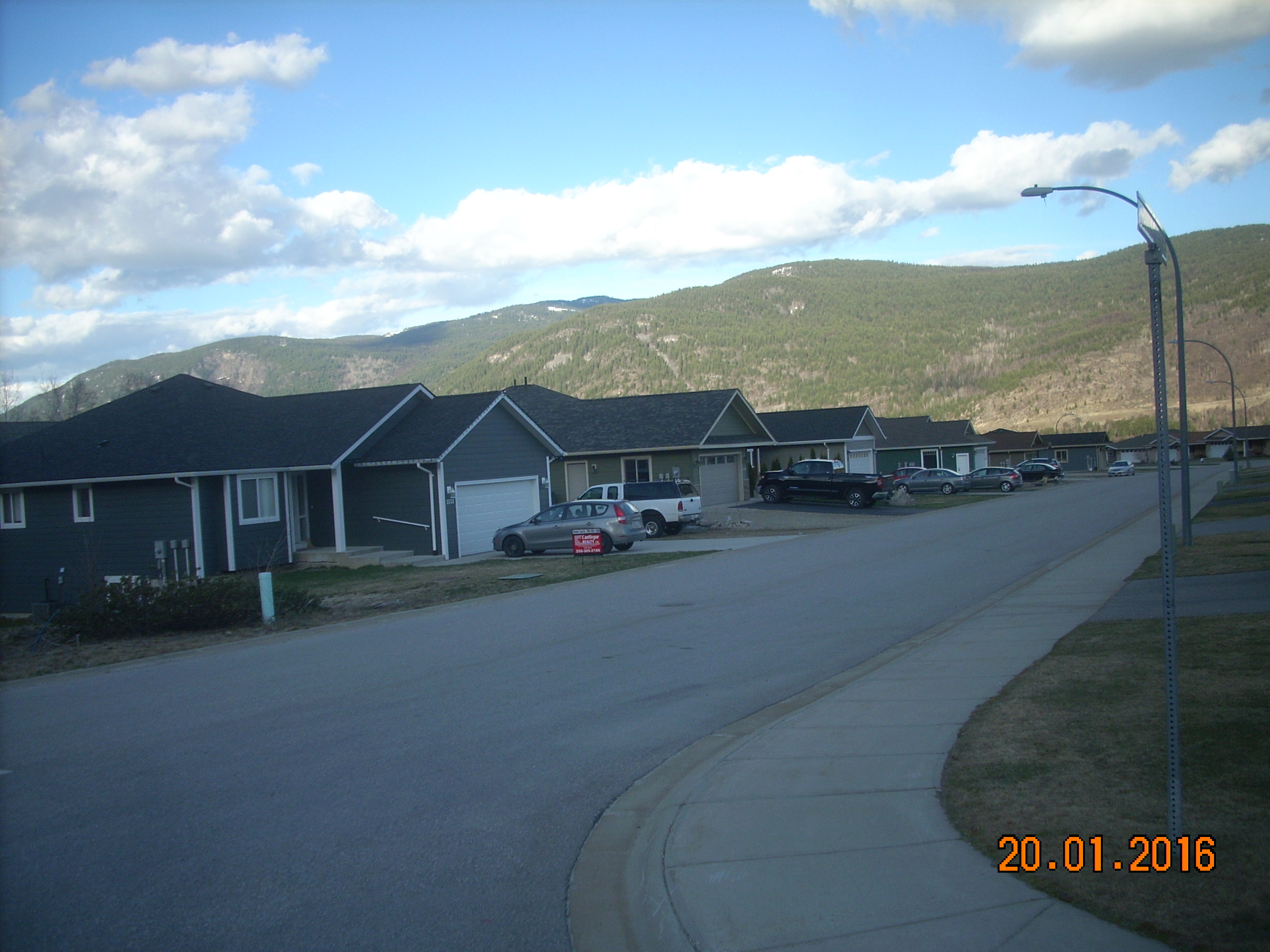
    4. Calamida Heights along Calamida Lane Looking East
    5. Successful in 47 deals
  26. Residential Lot Construction Process
    1. Ultimately Loan Agreement translated to a Residential Lot
    2. Accrued interest on loan agreements was paid as part of the final lot value
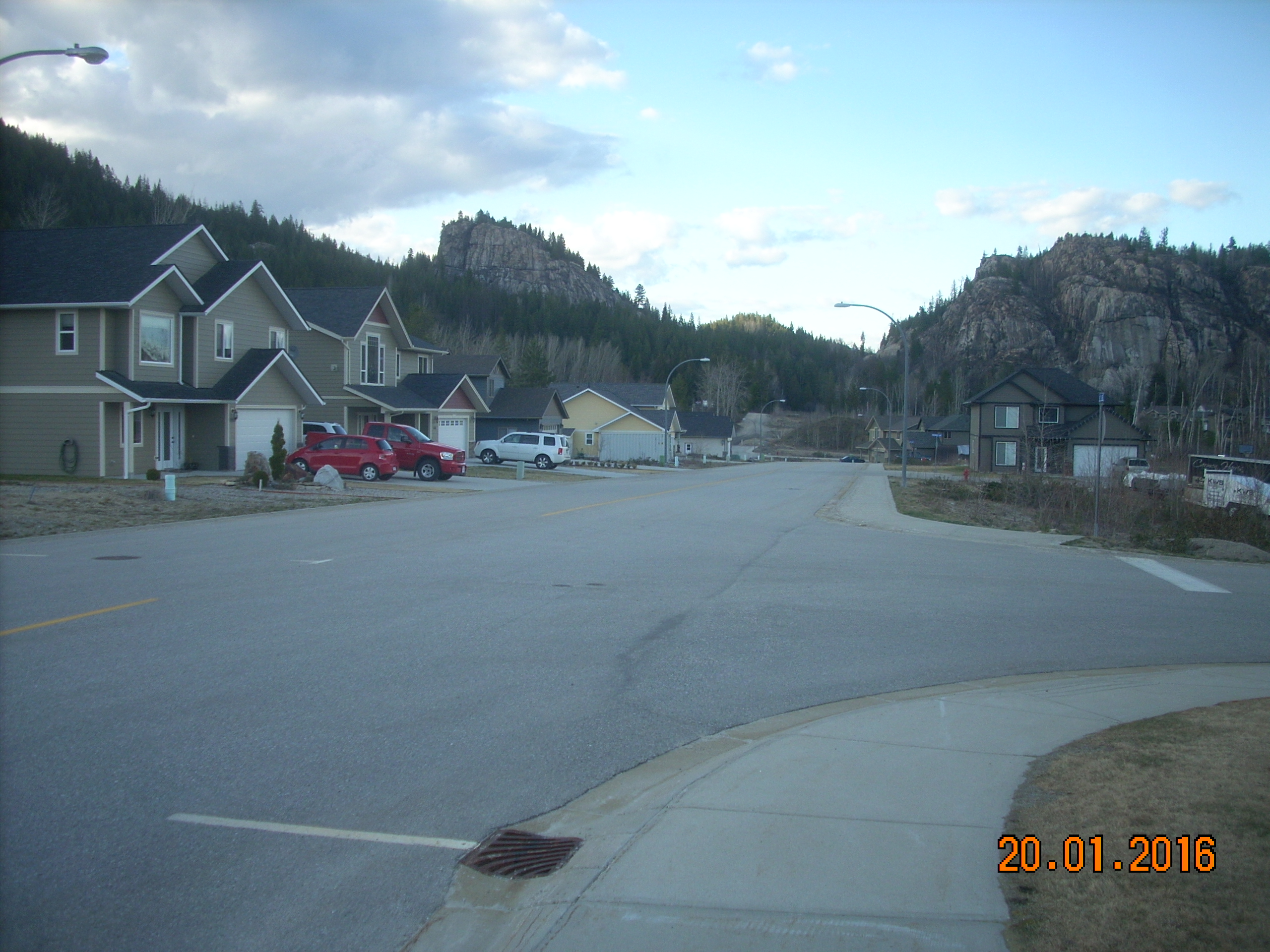
    3. Rosewood Lane Calamida Heights Development Looking East
    4. Successful in 34 deals
  27. Chateau Grandview Development Process (Lot 53) (Note This was Lot 52 in original Survey)
    1. A Chateau Grandview Committee took responsibility for this portion of the project
    2. The Committee knew how important success was in this portion of the project to the overall financial success now that the 16th Avenue development agreement with the CoC required $1 million from KCSHC
    3. Time was of the essence.
    4. The process included:
      1. Soliciting design concept proposals from architectural firms for a campus style project with
      2. Supportive living
      3. Assisted living
      4. Residential care
    5. Maximum zoning was available for 208 units on upper portion of Lot 53
    6. Developing a construction budget from an experienced general contractor for 64 supportive living units
    7. Budget was used from the Derek Murphy business plan
      1. Engaging Derek Murphy to conduct a business plan dated June 30th 2009
      2. Results in Executive Summary:Cooperative is proposing to build independent living residence (Grandview Manor) for seniors in its Grandview sub-division, which also includes 55 bungalows. The project will be built in phases, with the first phase to consist of 61 units. Future phases of Grandview Manor will likely include a complex care component. This business plan provides evidence to the effect that:
        1. “….The Kootenay Columbia Seniors Housing
        2. Grandview Manor is a desirable housing option with a clearly defined product that will meet a growing demand in the West Kootenay / Boundary area.
        3. There is sufficient evidence of future unmet demand for independent living projects like Grandview Manor to justify commencement of construction, once a critical mass of pre-sales have been achieved
        4. The capital and operating cost structures for Grandview Manor are sound and will provide quality residential and hospitality services at a very competitive price
        5. The Kootenay Columbia Seniors Cooperative has the organizational and financial capacity to successfully develop and manage Grandview Manor…..”
  28. Based on this Business Plan, the KCSHC continued with plans to develop Chateau Grandview
    1. Members signed intent to purchase units in Chateau Grandview
    2. Over 30 member units deposited $1,000 into trust to confirm interest
    3. HHTCS submitted an offer to become financially involved in the Assisted Living and Residential Care portion phase for a 49% interest with payment of $2 million when those phases became viable
      1. This is estimated to have an approximate value of $25,000 per door for the projected 80 planned units
      2. This closely compares to the initial appraisal on Phase I (Supportive Living) provided by Adrian Rizzo of Kent Macpherson Appraisals at $28,196.72 per door (See 28.6)
    4. HHTCS was familiar with ELIM, a project that their church sponsored in Surrey, B.C., and strongly suggested that the KCSHC visit the project as it had distinct similarities to Grandview in scope and philosophy
      1. Located at 160th Street and 90th Avenue, Surrey, B.C.
      2. The project is a “Campus Style” design with independent condos followed by Supportive and Assisted Living units which flow into Residential Care
      3. Funds accumulated from real estate sales are invested into the project to assist members financially
      4. This was part of the Grandview dream
      5. About 6 members of the Chateau Grandview Committee attended and received all types of information
      6. This was filed for future reference when Chateau Grandview and the rest of Grandview would reach a substantial level of completion
  29. Search for Mortgage Guarantors
    1. Sources:
      1. Columbia Basin Trust
      2. Canada Mortgage and Housing
      3. City of Castlegar and Regional District
    2. All were unable to provide the required guarantee
    3. Financing was not achieved
  30. Confirm Chateau Grandview Development Estimates
    1. A design/build invitation to contractors in April 2010, resulted in five proposals
      1. A review followed with three (3) selected for a final submission
        1. Tri-City Contracting Ltd (TCCL)
        2. Vic Van Isle Construction Ltd
        3. Maple Reinders Contracting Ltd
    2. All final submissions to have definitive preliminary design drawings and bonded tenders for a fee of $20,000 each
    3. In the industry, preliminary architectural designs are valued at about 1.75% of Construction Cost
      1. Based on the successful tender from TCCL of approximately ($10,897,00) or rounded to $11,000,000, the cost would have been about $200,000 for one design
        1. Three separate designs were submitted at a total cost of $60,000
        2. Tenders were received June 30, 2010
    4. TCCL was investigated thoroughly and became the recommended contractor
      1. Tender compared favorably with estimates prepared by the general contract  (See 27.6)
      2. KCSHC Chateau Grandview Rendering-Oct 1 2010
      3. Design concept as proposed by TCCL above
      4. During the investigation of TCCL‘s successful projects, H & H Total Care Services Ltd (HHTCS), the owner, was interviewed in two (2) projects now in operation in Kamloops and Penticton
    5. HHTCS became interested in the Chateau Grandview Project as an operator
    6. TCCL continues as an interested design/build contractor to this time
    7. Adrian Rizzo of Kent-Macpherson Appraisals in Kelowna, conducted an appraisal on June 04, 2010 for 61 marketable Supportive Living Units
      1. Appraised land value for 61 marketable units was $1.720,000 or $28,196.72 per door
      2. Appraised value for entire 61 completed units was $14,390,000
    8. The Mortgage Centre, a mortgage broker in Kelowna, was engaged
      1. To receive formal interim financing proposals from:
        1. Royal Bank of Canada
        2. Bank of Montreal
        3. Canadian Western Bank
      2. All the above proposals required a mortgage guarantee
    9. KCSHC as a cooperative needed substantial support
  31. KCSHC Challenges
    1. Members gossip spilled over into the community
      1. Support for the project started to deteriorate as a result
    2. The Twin Rivers subdivision, located across Highway 22 from the Grandview site, went on the market at about the same time as Grandview
      1. Their lots increased in sales price due to increasing infrastructure costs
      2. The result was a failure in potential sales
      3. Kootenay Savings Credit Union (KSCU) was the financing credit union and forced the developer to market the units to reduce indebtedness
      4. A large number of lots were sold to developers for $60,000 which set the market price for Castlegar lot prices thus undercutting Grandview pricesTwin Rivers Subdivision Competition
      5. This essentially stopped sales on residential lots at Grandview for a few years
    3. Administration Fee
      1. The KCSHC recognized from the outset that all transactions would simply pass through member loans, through to strata unit, residential lot or Chateau Grandview unit and so an administration fee was necessary to pay the minimal overhead costs
      2. The first 34 strata units passed a motion that $1,000 be paid on all transactions to June of 2008. Any others would be $5,000
      3. Chateau Grandview future fees were set at $3,000
      4. Ensuing transactions were challenged by 3 members (who purchased constructed units) who refused to pay the $5,000 administration fee after receiving advice from a notary public
      5. This was not legally challenged by the Directors due to shortage of funds
    4. 2008 Real Estate Crash/Global Financial Crisis
      1. The external economic pressures from a national housing market crash reduced values on all real estate
      2. This was a negative factor in the KCSHC activity
    5. Membership criticism
      1. Total membership totalled 285 member units at the height of the KCSHC,
      2. Unfortunately, attendance at membership meetings varied from 30 to a maximum of 50 members
      3. Also, most did not read the minutes distributed to all the members
      4. Others were influenced by misinformed gossip
      5. Unfounded criticism circulated about the Committees and Directors
      6. One member filed a complaint with the RCMP in Castlegar
        1. Complaint was that the Directors and the Project Manager (PM) did not handle KCSHC funds appropriately
        2. RCMP called the Project Manager for an interview which took 1 1/2 hours
        3. Constable could not reveal name of complainant
        4. PM applied to Freedom of Information (FoI)
          1. FoI advised that the complaint was that the PM took “kick-backs” from two of the major contractors and that improper contract awards process was used
        5. RCMP advised after the interview that they had no reason to keep the file open from this time forward
        6. No further action has taken place
      7. Another member spread rumours that the PM absconded with $3 million in funds from the Grandview project
  32.  KCSHC 2013 Plan of Action
    1. Action Plan Proposal to Membership by Directors
    2. After much research and meetings with affected firms a Plan of Action was developed as follows:
      1. All Shareholders Loans total about $1,400,000 without accrued interest
      2. Trade Lot 53 (Chateau Grandview site) to Loan-holders who held a 2nd mortgage
        1. Value of Lot 53 (See 28.3.2)
        2. Chateau Grandview Upper Bench Looking East
        3. Loan-holders would find a process to remove 1st mortgage of $448,700 and taxes
      3. Market eight (8) remaining Grandview Heights lots to create funds that would remove HCU “hold” on $275,000 operating loan
      4. Trade Lot 59 (Phase II Residential Lots) for contractor accounts/payable (A/P) to Marwest and Martech of $500,000
      5. Future Residental Lot Subdivision Lot 59
        1. Contractors would pay 1st mortgage of $500,000
      6. Unsold Residential Lots would be released to HCU
        1. KCSHC would continue to market them
        2. All net proceeds to HCU
        3. This would exceed the remaining mortgage amount
      7. Grandview Heights strata lots
        1. Remaining eight (8) strata owners that leased from KCSHC would register their strata and KCSHC would cease to be Landlord
    3. Meetings with Loan-holders
      1. After several meetings, agreement by secret ballot on above was above 95%
      2. KCSHC Directors Meeting
    4. Action Plan was initiated
      1. Eight (8) Grandview Housing Lots were sold to TCCL for about $275,000
      2. TCCL swapped completed duplex unit in lieu of cash and KCSHC gained ownership
      3. KCSHC sold duplex for about $275,000
      4. Directors held these funds in the Notary Public trust account pending distribution to HCU
      5. Cash to fund $275,000 “hold” by HCU on Operating Account was ready to transact
      6. This claim would precede any other
    5. Action taken by some members
      1. Although over 95% of the Loan holders were in agreement with the Plan of Action several took the initiative of filing a small debts claim against KCSHC
      2. These Claims came before a Small Claims Judge:
        1. Judge warned claimants their current protection was a 2nd mortgage
        2. That KCSHC did owe money
        3. Judgement against KCSHC would change loan into an A/P with no security
        4. Judgement for the claimants would bankrupt the KCSHC who had no cash
      3. Claimants responded that causing KCSHC bankruptcy was not their intent other than collecting monies owed to them but continued anyway
    6. Members filed a claim against monies held by Notary Public
    7. Small Debts Court seized $40,000 from the Notary Public Trust Account as a result.
  33. Bankrupcy
    1. The Directors had no cash as the repayment of the HCU Operating Loan would have released operating funds
      1. This could not happen now and they declared bankruptcy
    2. Bankruptcy Receiver filed a claim against the $40,000 in court and money was held pending proof of claim
    3. Current Status:
      1. The Court released $40,000 to the Bankruptcy Receiver
      2. Bankruptcy Receiver was finally confirmed by Court, October 29, 2015
  34. List of Possible Causes for KCSHC Collapse (not necessarily in priority)
    1. HCU shortfall of $275,000 in funding mortgage of $1,815,000 on Residential Lots (see 19.c.i)
      1. HCU freezing of operating account left KCSHC with no cash flow
      2. HCU short funded a registered mortgage
    2. City of Castlegar (CoC)
      1. KWL Engineering Report indicated that a self-draining ancient river bed would require no storm sewer
        1. “….new development should include provision for stormwater detention / retention ponds to minimize the impact of minor…..storms…”
        2. “5.2….Castlegar watersheds have a high infiltration capacity because they are predominantely comprised of sands and gravels into which rainwater and snowmelt can easily be absorbed. This why soakaway manholes have proven to be effective within the city…..”
      2. WSAE designed a storm retention pond (value $80,000)
      3. CoC requirement was a costly overflow channel to Scoffield Creek (over $350,000)
      4. This was not anticipated in the KCSHC development budgets
      5. Initial barrier to the infrastructure design process was that the CoC noted that a south sanitary sewer trunk line downstream from the intended project through Columbia Avenue was known to have a partial collapse
        1. This possible constriction had to be evaluated
        2. KCSHC was advised that it was their obligation to determine whether the sewer line would be adequate
        3. KCSHC protested that this is an existing infrastructure
        4. End result was that an engineering firm would be hired to evaluate
        5. KCSHC finally agreed to a 50/50 split of costs on the understanding that it would be a competitive tender process
        6. CoC selected a firm without KCSHC consultation and advised on November 29, 2005 that the total fee would be $15,800 and that KCSHC needed to forward the agreed 50%
      6. Legislated construction of 14th Avenue (now 16th Ave) scheduled in CoC bylaw 695 for 2011 – 2014 long before KCSHC came into being.
        1. CoC was to allocate Development Cost Charges (DCCs) into a fund since 1979 to fund projects such as these. (See 12.4.4.5)
        2. CoC advised that there were no funds
        3. How was this possible?
        4. KCSHC forced to pay a cost sharing with CoC of 50% of $2,000,000 cost
        5. This was not anticipated in the KCSHC budgets
      7. Increase design criteria of water pump house
        1. Basic level is to ensure pressure maintained at 43 psi
        2. This would have required a pump and pressure control mechanism as designed by WSAE for about $80,000
        3. Final design requested by CoC had 4 pumps in sequence at a cost of over $350,000
        4. This was not anticipated in the KCSHC development budgets
      8. Increase redesign criteria of storm reservoir designs than those recommended by Kerr Wood Leidel (KWL) Engineering Storm Sewer Report for South Castlegar dated February 1993
      9. Basic Design of Sanitary, Water lines became oversized
        1. Initial request was to install oversize lines with CoC paying the difference
        2. Urban Systems Ltd (USL) review came back with oversize piping over the WSAE designs
        3. WSAE had to purchase a computer design system to prove that USL request was over designed
        4. Time spent and additional expense to KCSHC was unwarranted
        5. This appears to be an irregular action by CoC
        6. CoC relented in the debate and permitted the WSAE designs to go forward
      10. Water Loop requirement to Emerald Green held as a barrier to development of Chateau Grandview
        1. CoC position was that “looping” to Emerald Green was an Interior Health requirement
        2. KCSHC had to pursue a long debate to prove that this is not a requirement by Municipal Code
        3. This appears to be an irregular action by CoC
      11. Bylaw 695 Development Cost Charges practice on adjacent lands
        1. Adjacent property owners should contribute to cost of adjacent streets and municipal services
        2. A large property owner adjacent to 16th Avenue was assessed $5,000 in the future, by the CoC AO, toward the $2 million 16th Avenue construction although the property is within City limits
        3. Was this fair?
      12. Another large adjacent property was subdivided by its owners (3) at that time and were not assessed any costs because they were in the RDCK and not within City limits
        1. This appears to be an injustice
      13. Offer by BC Housing (BCH) to fund 50 to 60 factory built housing units in April 2009:
        1. Government funding became available (Federal/Provincial) offered by BCH
        2. Two executives came from BCH Head Office in Burnaby to Castlegar to meet with the CoC and KCSHC
        3. Manfred Gerschak and Danna Locke met with
        4. President Jim Mullen and Director Harry Jukes of KCSHC
        5. No representative came from CoC
        6. Suggested site was original Calamida Stadium in Lot 53
        7. KCSHC was prepared to donate land to meet BCH criteria
        8. BCH required CoC to become involved
        9. BCH suggested access road to 16th Avenue as acceptable criteria
        10. CoC would not meet with BCH and KCSHC
        11. Minutes from Directors Meeting May 06, 2009
          1. “….Subsidized Housing was handled by Jim and Harry as they met with Manfred and Danna. The representatives were impressed with the site. There had been hope that the City of Castlegar would be involved and although a formal letter had been written to Council and the Mayor, it was learned that it had not been formally presented to Council. Elmer, however heard from John Malcolm who seems to favor another area closer to the Medical Center for this purpose. Malcolm contacted BC Housing personally……”
        12. The opportunity to build 50 to 60 housing units was lost because this offer was for a limited time only from the Federal Government that was offering a stimulus to the Manufactured Homes Industry
    3. Canada Mortgage and Housing
      1. KCSHC plan was that seniors would purchase units so that no rent would have to be paid in the Chateau Grandview project
      2. This plan was supported by the fact that over 30 members had placed deposits of $1,000 for a unit
      3. Since the system was used successfully to develop units in Grandview Heights where seniors purchased 47 units from their own resources, this would apply favorably in this instance
      4. It was further supported in that those members living in Grandview Heights would sell their units and progress to Chateau Grandview
      5. This system was already working well in the ELIM project in Surrey (see 25.v)
      6. CMHC would not mortgage guarantee Chateau Grandview loan offers from
        1. Royal Bank
        2. Bank of Montreal
        3. Canadian Western Bank
      7. Reasons given to the Mortgage Centre were that:
        1. Loans were interim financing with intent to purchase units by seniors
        2. CMHC would consider a guarantee if the project was a rental proposal
        3. The KCSHC as a cooperative and owner was also a negative factor
        4. Project could not proceed unless a change in ownership plan was instituted
      8. This plan was in progress (see 31.2) with the Loan-Holders becoming a developer rather than the KCSHC
        1. The plan then would be to initiate a rental project if necessary
    4. Alto Construction Ltd (ACL) (Phase I Grandview housing contractor)
      1. ACL was the low tender recommended by the Building Committee
      2. During site preparation various debates occurred regarding site conditions and ACL would not accept the Clerk of Works (COW), Project Manager (PM) nor the Chair of the Building Committee (CoBC) but requested to meet with the Building Committee and the Board to allow them to hear his complaints
      3. The joint recommendation of the PM, CoW and the CoBC was that ACL be removed from the site as the future would not be conducive to a good construction project
      4. The Board and BC directed the PM, CoW and CoBC to negotiate an acceptable agreement which was achieved
      5. The project became a difficult course of construction with challenges in the design/build process for the entire duration
      6. Additional costs and delays were the result
    5. Columbia Basin Trust
      1. This public agency became private competition to not-for-profit societies
      2. It was admitted by a CBT Official to a meeting attended by CoC, MLA, MP and members of KCSHC that CBT could not assist KCSHC. This could be a possible liability claim by a local operating care provider who is treated with exclusivity by CBT (see 10.1.3)
      3. Would not approve Chateau Grandview interim financing
        1. Stated that Chateau Grandview could not meet minimal financing requirements
        2. This is in contrast with formal offers by:
          1. Royal Bank
          2. Bank of Montreal
          3. Canadian Western Bank
        3. Was CBT continuing with dated reasoning ? (see 10.1.3)
    6. Ministry of Transportation and Highways (MoTH)
      1. The request came from the AO of the CoC that the MoTH needed another traffic study in 2012
      2. KCSHC representatives met with CoC and MoTH represenatives at City Hall
      3. MoTH advised that the intersection of Minto Road to Highway 22 has become unsafe requiring another traffic study
      4. KCSHC advised that a traffic study had been conducted in 2006 and that the subdivision had the approval of the CoC AO and was registered at Land Titles Office and this was an irregular request
      5. CoC and MoTH insisted and also advised that the traffic study would need to be paid for by the KCSHC
      6. The PM continued to protest this action and the MoTH engineer finally invited the PM to outline a historic process in the development of Grandview
      7. The result was an eight (8) page review submitted to the AO of CoC
      8. MoTH relented and the $1.8 million intersection was built and financed by MoTH a year later
  35. An Overview
    1. The Kootenay Columbia Seniors Housing Cooperative’s intention was to build affordable seniors housing and the seniors of Grandview can’t understand why they were subjected to the challenges that have been outlined above
    2. The Reader has an opportunity to review and digest all that has been stated above to advance his own conclusions.
    3. The future ????
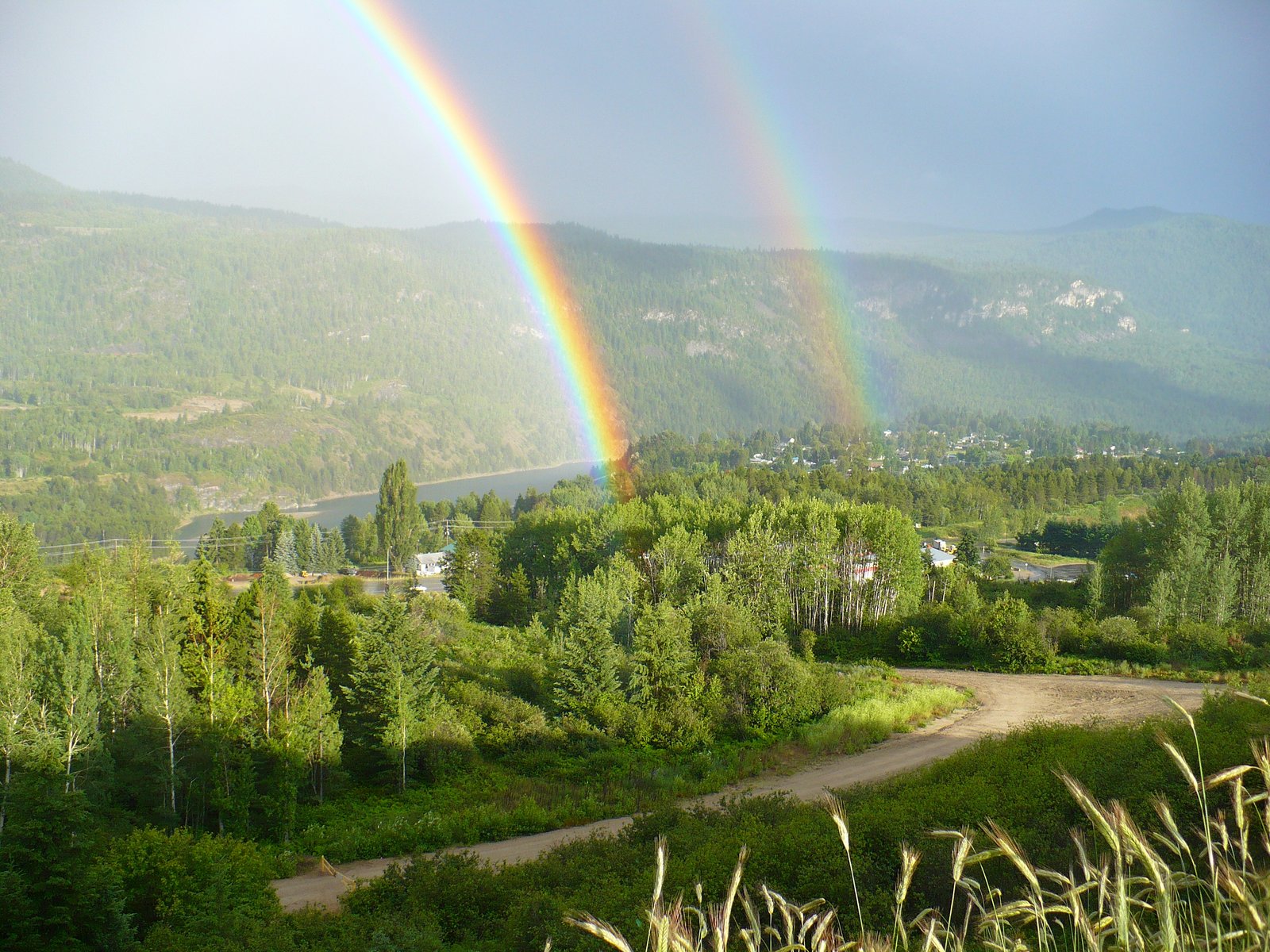
    4. KCSHC Rainbows Come From Heaven

Written from documents and observations from the viewpoint of a Project Manager, drafted and dated December 11, 2015, by Elmer Verigin

  • Elmer met with Elaine Whitehead, Administrative Assistant to MLA Katrine Conroy on November 03, 2015 to obtain a copy of her notes on the referenced CBT meeting. She advised that she had no difficulty in the use of this information
  • Elmer met with Dan Sahlstrom P.Eng., of WSA Engineering on November 03, 2015. He reviewed the accuracy of the references to WSAE in a draught of this document. He had no difficulty with having his name published in this document
  • Elmer consulted with former members of the KCSHC that still live at Grandview, all of whom had held various levels of committee position in KCSHC for assistance in preparing this paper
    1. Alden Bigsby, Fred Houghton and Monique Huchet, former members of Board of Directors, Promotions Committee and Chateau Grandview Committee
    2. Peter Morgenthaler served on the Chateau Grandview Committee and Board of Directors
    3. Consulted with Bill Enstedt who served on the Board of Directors and Promotions Committee
    4. Consulted with Nora Jukes who was on the Landscape, Promotions and Rules & Regulations Committees
    5. Consulted with Marilyn Verigin who had served on the Chateau Grandview Committee
    6. Thanks for some pictures provided by Nora Jukes
    7. Posted by E. Verigin to blog March 25, 2016.

BACK IN 1958, WE HAD A DIFFERENT STYLE OF HIGH SCHOOL GRAD

22 Monday Jun 2015

Posted by everigin in People

≈ 1 Comment

Tags

Pelly High School

My Granddaughter’s, Abby, graduation this year (2015) from J. Lloyd Crowe High School in Trail, B.C., stimulated this fond memory of her Grandfather’s grad from Pelly High School (1958). This was further reminded by the recent tragic fire that destroyed the two storey brick Pelly Museum which was the former high school for those graduates.

The pomp and ceremony for some 168 Grade 12 Class members in the Cominco Gym, the $500 plus beautiful gowns and even a chauffeur-driven Limo for some, was in sharp contrast to the drab Pelly Memorial Hall for 13 of equally starry-eyed potential “Movers and Shakers” who could only afford ill-fitting suits and the female class members showing off their best dress, purchased at Nadane’s in Kamsack, Saskatchewan, at a sale.

There was no parade, in Pelly, and my parents came in their best Sunday dress on a buckboard pulled by their faithful horses (my family was the only one who could not afford a car).

Lloyd Davidson (deceased) was a favorite candidate for Valedictorian, which was customary for a student with the top class marks. He allowed his A average to drop at Easter when he realized that he would need to make a speech at Grad. He was not even going to attend the Grad dinner because Tony Pryslak and him did not have a date and they heard that it was customary to have one.

Yes we took a group picture of Grads and parents as well as individual pictures of grad / escorts and grad / parents which we thought was a waste of time but now are treasures when they can be found.

I recall standing to recite a poem that I had written to myself “Give Me a Guiding Light” and then shared with my Principal Mr. Parks. He suggested that I read it as part of my remarks as Salutatorian (second class marks) custom.

“……..GIVE ME A GUIDING LIGHT
Who will give me a guiding light?
Who will show me the way?
Who will teach me to have sight?
So I do not go astray

I have come to the crossroads of time
One path I must take
I call on sense sublime
Mistakes, I must not make

Great men come and go
Their mistakes are easy to see
But it is not mine to know
The mistakes that may come from me

Give me power to go alone
To use my knowledge for gain
To make all intelligent thoughts come known
And let my plainest sense not wane

Give me men who are like me
So together we may go forth
Some day the guiding lights to be
To shine like the Star of the North

EW Verigin May ?, 1958, recited at the Grade 12 Graduation as a Salutatorian Speech (uncut)……”

My parents sat across from me at the banquet table. I noted that my Dad had tears in his eyes as it was unbelievable to him that one of his blood had achieved high school graduation. His educational journey was walking through a school for one day when he was obligated to plow the field before school convened in the morning and again in the evening. This became onerous for him and he opted to the “more important” function of family survival and stayed ungraduated.

Veregin High School had only a few grads and so my cousin Nora Trofemenkoff (now deceased) wrote me a letter asking if she could come to be my escort and enjoy a ceremony that she was unable to in Veregin. She arrived that afternoon on the STC bus, all decked out in her best dress. We made a “striking” couple and me in the white sports coat that I was able to purchase with my summer earnings from working, building houses, with my two brothers in British Columbia.

My friend Nick Strukoff was an undergrad and was able to get to use his Dad’s car so that we could drive around after the ceremonies. For whatever reason, I decided to buy two packages of wieners so we could roast them somewhere that evening to “celebrate”.

So later that evening the “special” party included my other friend Fred Konkin and his sister Sonia. We arrived at the Assiniboine River near the former site of Fort Pelly and built a campfire by the water’s edge. I need to note here that this group of friends did not imbibe in alcohol so it was soft drinks, roasted wieners and buns.

I managed to eat far too many wieners (I liked them very much). The story would likely result in grads drinking too much alcohol and “throwing up”. Well I did “throw up” but it was the wieners, which my body was not familiar with, for the same result.

Not that exciting in 1958 but still a story!

June 21, 2015 in my Office at 145 – 4200 Grandview Drive, Castlegar, B.C. 0820 hours

The “Bucket of Blood”

04 Tuesday Nov 2014

Posted by everigin in People

≈ 4 Comments

OLD-FASHIONED FUN AT DUSTY HALL (“BUCKET OF BLOOD”)

When we reach the ripe age of 74 we keep believing that we can share stories with our great grandchildren (I am happy to admit to having one now), I would like to suggest to them how they should live the righteous life when I was young. I want to guide them the best that I am able.

Let’s take us back to 1957, when I was just about 17 and was pretty well an authority on everything, certainly a lot smarter than my parents who had not even passed grade school. They used to tell me about the raucous times that took place at some of their Dances but that things had settled down now.

So my buddies Nick Strukoff and Fred Konkin decided we should travel to Dusty Hall this one Saturday. In those times, there were many youth in the area and dances could be attended Friday and Saturday within the 20 mile radius of Pelly, Saskatchewan. There was many halls and country schools who were all trying to raise funds for some community event and so a dance was both entertaining as well as financially, a good source for these funds.

We had heard just how notorious this Dusty Hall was as it had a nickname “Bucket of Blood”. Adventure was on our minds as well as just what the girls must look like way down at this place. Its location was East of St Phillips School just off the Kissakoosee First Nations and midway to Kamsack from Pelly off Highway 22.

As luck would have it, it had rained all day Saturday and the roads were “greasy” and at best impassable for the sensible people but the “Three Amigos” were undaunted in their resolve to explore, taste and conquer territory that we had not explored up to that time.

We had “sketchy” directions to this place and believed we made the appropriate left turn off Highway 22 and realized that the road was even worse than we had imagined as our headlights tried to penetrate the fog and the absolute pitch black darkness.

Fred was for turning around but where could we do that? We stopped to consider our options when we heard what sound like fists hitting flesh and cursing. “Should we investigate” we asked each other?

Whatever was taking place appeared to be happening in the ditch. Of course we had no flashlight and were oblivious to what was actually taking place there.

“Hey whoever is there”, we shouted and the wild action ceased temporarily. “Any idea where Dusty Hall might be?”

“Just turn right a 100 feet ahead and you should see the lights a short while down on the Left” was an answer from someone.

“Thanks” as we were getting into the car the hitting and cursing started again.

So curiosity was rampant within these three lads now. “No sense going back now”

We slid and spun our way into this hall that was all lit up only over the door and the outline of cars in the parking lot with no visible people about.

“Well are we going in?” we asked each other.

“Might as well since we are here!” we were unanimous at this point.

We opened the right leaf of the double door and this is the scene that greeted us:

• A four piece band consisting of an accordion, guitar, fiddle and drums on a stage across from the entry
• They were playing Johnny Cash and Slim Whitman as the guitar player belted the lyrics into a microphone
• Benches in an inverted U-Shape with the bottom of the U to the stage
• Perhaps 2 dozen very pretty girls all sitting but looking us over
• No guys anywhere

“Wow, we have just entered Paradise”, we exclaimed in unison.

We got the nerve finally, and asked the prettiest ones to dance. They were definitely not wall flowers as it is hard to say how long they had been waiting to dance.

“So you gals are stag?” was my question.

“No the guys are all out there drinking” was the disgustful reply.

Suddenly, an entry was made by two men all muddy but walking arm-in-arm like they had been buddies forever. We surmised that this must be the guys fighting in the ditch that had provided us with directions.

As they swayed side to side (obviously from the bright lights in the hall) they kept reassuring themselves that they were friends now.

Then one of them released the other and started making his way to the stage. The other shouted, “now that is exactly what I told you not to do!”

The next thing that took place is too humorous to explain because the one lunged at the other and they both cart-wheeled as they made their way back outside to continue this obviously unresolved issue between them.

The guys started drifting in and were giving us the once over with that look that was very explicit “you guys are not thinking that you intend to pick our girls, now are you?”

The other message was clear “if you are, you will pay dearly for that privilege”

Three sports made a quick bee-line for the exit and were on our way home for a few miles when the conversation started again, “so now we know why that place got its name!”

Yes things were different then.

Elmer Verigin
Written , November 04, 2014

Eurasia Trip Notation dated May 15, 2008

04 Tuesday Dec 2012

Posted by everigin in People

≈ 2 Comments

NOTATION LOG DATED: May 15, 2008 Armenian / Georgia Border

LOCATION:  Armenian / Georgia Border Crossing

“…….At the Armenian border, we went through the usual procedure as at the Georgian / Azerbaijan border five days before:

  • Bus stops before the border
  • The Azerbijian or Georgian Guide collects all the passports
  • The Guide proceeds to the crossing
  • We all wait in the bus
  • Meanwhile there are hordes of people wanting to go both ways (I am not sure why the ones that have been cleared to proceed are still detained by the Customs people)
  • There are Border Guards all over with stern, serious faces and armed to the teeth
  • We wait some more
  • The bus goes through the first gate
  • We wait
  • Then everyone is ordered off the bus and all baggage is claimed (on the Georgian border, the bus was cleared into Georgia from Azerbaijan)
  • Everyone takes their baggage and files one by one by a border guard that checks your passport, looks into your eyes and gives you that look that would paralyze a spider
  • The Tour Guide is feverously encouraging the process
  • Other people are trying to jump the line
  • The Tour Guide is chastising these people by telling them that she can lose her job if she doesn’t get all her sixteen (16) tourists through in order
  • There is an argument. The people return to their place in line but slowly edge up again
  • We make it through for a waiting bus and a new Armenian Tour Guide
  • 1 ½ hours have passed
  • We all want washrooms
  • Then we are off and the new Tour Guide tells us about the best parts of her country Armenia
  • We listen and try to get used to this new accent
  • The Guides are just super, there is nothing that they would not do to accommodate our comfort and pleasure
  • Usually the 1st stop is a Monastery and a tour
  • Next stop is our introduction to the cuisine of the new country with food galore
  • In Georgia and Armenia, the first stop is a family-run restaurant. Very homey and intriguing
  • In Georgia, there were the Singers and the wine kept flowing
  • Also in Georgia the wine toasting was exceptional

So I had recounted the story of how Georgia became “God’s Land” with a “twist” by the Armenian Guide which went like this:

“…..the Georgians told you how God was handing out the lands to all the people but the Georgians were busy drinking wine and making toasts. They showed up late for the allotment of land. God told them that there was no more land available. The Georgians pleaded with God for sympathy to their plight as they were good hospitable people and deserved the best. All their toasts had been to God and so God relented after this intensive pleading display by the Georgians and gave them the land he had reserved for himself. So, that is why Georgia is referred to as “God’s Land”

The Armenians were also late and found out to their dismay that the Georgians had already received the best land and so God had no more to give out; therefore, this is why the Armenians got the stones and rocks for Armenia.

But Noah had landed his Ark on Mount Ararat and so the first people of God and the Christians were Armenian. After Christ’s crucification, Gabriel (I think), came out in the 1st century and was able to dismantle the pagan temples and establish the church. Gabriel spent thirteen (13) years in a dungeon, put there by a Pagan King……….”

*****************************END ******************************

If You Love Horses, You Will Like this Chronicle

10 Monday Sep 2012

Posted by everigin in People

≈ Leave a comment

THE MYSTERIOUS HORSE LOVER

 We were working with Don Muirhead from the Department of National Revenue (DNR) in his attempt to lower his costs of maintaining the border crossings in British Columbia and Yukon. The original chance meeting in 1971 provided the joint opportunity to provide services for Border Crossings at Patterson, Nelway, Rooseville, Rykerts and Boundary Bay. The scene of this story is Beaver Creek, Yukon in 1972.

Verigin Industries Ltd (ViL) had never worked on projects too far away from the Kootenays and these border crossings were a new experience for our crews and administration challenges for me. All projects were Design / Build as a “Turn-Key” with all the responsibilities to ViL and approval and inspections by Don. The relationship proved beneficial to both parties.

The Yukon projects involved the provision of staff quarters at Pleasant Camp, B.C. and Beaver Creek YT.

There is a story on the procurement of materials and mobilization but I will deal with one incident at Beaver Creek that will be the subject of this story.

Beaver Creek is located on Mile 1220 of the Alaska Highway and I had arrived on site a few days after my crews had mobilized. After spending time on the site, the crews retired to the motel where they were fed and housed by the lady proprietor in the small community of Beaver Creek. It was the end of June an there was little or no darkness at nightfall. I had brought up fresh strawberries as a special treat from Lucy Voykin for her husband Peter and the crews. Our landlady made enough cake so that the RCMP Constable and the other Boarders could enjoy this rare treat.

So it was still daylight when I decided to retire for the night at 2300 hours. I awoke suddenly at about midnight, sensing that someone was in my room. At that time in the Yukon, no one ever locked their doors. So it was that the Landlady was sitting on my bed. I was rather taken aback as I had no idea of her intent when she explained that “a lady is in the bar wanting to see you. “ My response was obvious “I don’t know anyone here”

The Landlady went on to explain that, “This lady lives alone and is sometimes confused but asks to see you right away.” Well I needed to find out what was going on.

I was ushered to her table in the Bar and I sat down across from a wizened elderly lady who obviously spent a great deal of time in the outdoors. She was silent. As I had no idea why I was there in the first instance, I decided to ask her if she wanted a drink.  She nodded affirmatively, so I ordered a drink for each of us.

She was still silent through the first half of her beer when she asked “You are an Engineer, correct?” I confirmed with a simple “yes”

“I have many horses on a spread some distance from town”. “The situation there is that my horses need to cross a creek in the winter and I would like to protect their legs from getting cold. I need to build a bridge. I have a great deal of steel cable and  I need a design for a suspension bridge. Can you design such a structure?”

This was getting interesting! I thought about my answer while she sat patiently again deep in her own world as if I was not there.

“I do not design suspension bridges as this a specialty that some Civil Engineers undertake as there are many disciplines for Engineers available and each Engineer must understand his level of expertise and knowledge and not go beyond that as it is his responsibility to protect the public and exercise safety as his oath to the practice of Engineering.”

Did she hear me? Did she understand what I said? After what appeared to me to be an eternity, she answered, “Will you do this thing for me?”

The Landlady had warned me that the lady may act strange and perhaps she may have the beginnings of Dementia and so I was not sure how to proceed to explain that I had no interest in designing nor constructing such a structure for an unknown span with a specific sized cable that may not be the required capacity to perform under the conditions on the site. So, how do I handle it so as not to insult her and yet gallantly bow out of the scene?

“Like I said, this is not within my level of expertise and I need you to understand that I can accept most challenges in construction but in design, I need to practice within my field. I am a Builder and not a Designer.”

“Will you come with me and have a look?” she responded after a period of “deafening silence”.

How do get out of this I thought?

“ I need to leave Beaver Creek at noon today (it was 0100 hours now) and with the three (3) time changes and four (4) hour drive, should just make the plane in Whitehorse that leaves at 1900 hours today.” After a pause, I added “how long will it take us to get to your place?”

“About an hour” she responded.

“I will meet you at the motel at 0900 hours then” I offered. “We can have a look and perhaps, I can suggest another Engineer or firm to undertake the opportunity”.

With that I got up and left her sitting at the table with a half-finished beer.  I was still unsure if she comprehended my answer and intent.

My duties the next morning were to ensure that there were enough materials, equipment and labor on site to complete our contract and so I had little time to think about the lady.  At noon check out time, I drove away when I noticed her coming onto  the jobsite. “Well, too late” I said to myself and left for Whitehorse, actually, happy that it did not turn out.

My crews told me later that she had come enquiring for me and appeared to not understand why I was not there.

Is this the end of the story?  Read on for an epilogue!

Some seven years later, I dropped in to Beaverdell, B.C. for breakfast on my way to the airport at Kelowna and noted a Truck Driver enjoying the great breakfast for which this restaurant was known.

“Where do you drive and what are your more interesting routes” I started the conversation as there was no one else there.

“All over Canada and the USA” he responded.

“What was your most interesting trip?” I extended the conversation.

“One time I got called to take a cattle van to an address near San Francisco as a truckload of horses needed to be transported to the Yukon.” “It seems that this herd of horses had aged and were in need of being destroyed” The wife of this retired Doctor refused to allow this to happen as she considered them all her beloved pets.”

After spreading strawberry jam on his toast, he carried on “and so the lady rode in my cab as we drove the entire route to Beaver Creek, YT. “We stopped at a “path” access from the Alaska Highway and she led off her horses into the apparent wilderness”

On his third cup of coffee, he added, “I was prepaid by her husband before I left San Francisco and so had no reason to hang around”

“How do you like that story?” he ended.

“I met that lady at Beaver Creek, YT, some seven years ago when she wanted me to design a suspension bridge for her horses,” I ended to a puzzled look.

Take that for a coincidence!

++++++++++++++++++++++++++ END


A tribute to Pete Oglow (deceased) and permitted in this Blog by his son Ivan Oglow September 05, 2012

05 Wednesday Sep 2012

Posted by everigin in People

≈ 7 Comments

A REAL PETE

Jack Charters, a well-known local Writer, offered this statement of respect at Pete’s funeral:

“….To Pete, the idea was an Action Plan and he immediately set out to create what was conceived…”

That is the way I knew Pete Oglow (deceased). No matter how we met as

  • A chance meeting with “How are you?”
  • A phone call with “What are you doing? Can we you come down and let’s talk”
  • A discussion after the many common get-to-gathers at various community meetings
  • A social occasion

There would always be that statement “what do you think should be done about___?___” There it was, this matter needed to be discussed. The discussion never ended without an action plan as to what the next step would be.

Yes, I knew that I would get involved in whatever the plan was as Pete asked questions that only a yes answer could be the answer Well you now know the ability of this man to get people involved in doing things he considered important.

There is no intent here to write a biography about Pete but just some glimpses and vignettes of the various events that we had mutually enjoyed over the fifty (50) odd years that I knew Pete and his family as we were neighbors for many of those years. These incidents are not in any particular order of significance nor sequence but only as they come to my mind.

  1. In 1969 he met me in front of the Liquor Store in Castlegar on a Saturday afternoon when my guard was right down and proceeded to ask a series of quick questions:
  • “Can you draw plans?”
  • “Do you believe that a Doukhobor Village should be resurrected?”
  • “Would you like to accompany my brother Bill and tour some of the remaining original villages?”

Of course the answers to these questions were a naïve, yes.

“Well Bill and you will go tomorrow and visit Glade, Shoreacres, Ooteschinia and Pass Creek Villages and take measurements”.

There it was, I was committed without too much ado. Slick? Yes, very much so!

That started many years of volunteer time working beside Pete and many other dedicated people to build a full scale Doukhobor Village as a Destination Tourist Attraction, across from the Castlegar Airport.

That involvement meant many years on the Board of Directors with several terms as President. It was a challenge from fund-raising for construction to funds for operation which were much more difficult.

Throughout all this entire time, Pete dedicated his time, resources and money to achieve the end result, in a tireless and a total committed fashion.

There is a long story about this project that deserves a future article in itself which I am committing to write at some time later.

  1. The last two-storey unit in the original Doukhobor Village was left to construct and it appeared that all grants and other funding had disappeared. Pete called me in for a drink of Scorch and conversation. “Elmer, how are we going to complete this Village?” It was the drink or perhaps a surge of intuition that caused me to suggest that perhaps a direct approach to the British Columbia government was in order. “You have to go to the Minister involved directly to get the cash necessary”, I suggested.

“Well let’s do it, “Pete responded matter of factly and immediately set the wheels in motion by suggesting “get in touch with them and let’s go see them!”

There I was committed again to an obligation which I could ill afford at that time of my life.

“Pete, I think the Provincial Cabinet is travelling the Province and has a scheduled Meeting at the Inn of the South in Cranbrook from what I saw in the Trail Times,” I recalled.

“Well get let’s go and see them”. The idea and the action were synonymous for Pete.

The weekend that I was scheduled to watch my son Kim play hockey in Spokane, Washington, was now compromised by a trip to Cranbrook and so I made a deal with Pete, that early in the afternoon that Saturday, I would have to leave so that I could be with my family that evening at least and watch a game on Sunday.

We were off on separate vehicles and upon arrival at the hotel, immediately we started the process of trying to arrange appointments with whichever Minister we could. A meeting with the Highways Minister and the Mines Minister were all that we were able to accomplish by 4:00 o’clock but they both advised us that they had no resources for a project such as the Doukhobor Village and we would need to see the appropriate Minister.

“I cannot stay longer. I need to go,” I advised the disappointed Pete.

“What am I supposed to do with these seventeen (17) wooden ladles and one (1) huge ladle which I made for the Ministers and Premier?”

“I don’t know,” I was getting tired and had enough of all this as we were walking down the hallway of the hotel looking for the exit. Just then I noticed the Press Secretary for Premier Bill Bennett talking to someone from Press, of course. I grabbed the large brown paper bag from Pete and offered it to the Press Secretary.

“We are from the Doukhobor Village in Castlegar. We wanted to meet the Premier but were unsuccessful in arranging an appointment. Pete crafted these ladles for the seventeen (17) Ministers and the large one is for the Premier. Can you pass this along to them?” I continued on my exit.

“You can make the presentation yourself at the Dinner tonight,” was the quick response.

“I am sure you have a full program that would not allow for this”, I countered and again, tried to leave.

“You are the program now as our guests,” the quick-thinking Press Secretary concluded. “See you at 6:00 o’clock in the Banquet Room!

“Pete, that is fine, you attend the banquet but I have to go now”.

“No, you need to be here and help me,” Pete pleaded.

And so there we were sitting on this table with a few Ministers and chatting like “old hats” about many matters that were affecting the economy of British Columbia when the Press Secretary stood up and began introducing the representatives from the Doukhobor Village in Castlegar.

“Okay, Pete, you go up there and make the presentation”, I started pushing him when he responded with “I made the spoons but you do the talking.”

There was no way that ‘you can push or pull a stubborn mule’ they say, so I got up with the large brown paper bag and asked for the Premier to come forward and accept a gift. I went on about how at the Doukhobor Village in Castlegar, where the best Borsch was made, and that the Kootenay Doukhobor Historical Society (KDHS) is inviting the Premier and all his Cabinet for a ‘free lunch’, hitting on the Premier’s favorite by-line and then offering the largest ladle for him to dispense the Borsch to all his seventeen Cabinet Ministers when they came to the Village.

With smiles abounding, Premier Bennett, responds with “there is no free lunch, Elmer. You know that! So what do you want?” as he accepts the gifts.

“Premier Bennett, the KDHS has one more building left to complete the reconstruction of the Doukhobor Village and you can bring a cheque for $120,000 with you when you come”, I bravely offered the challenge, thinking that I might as well ‘throw the line out!’

“Well there you go,” the Premier responded with clapping and guffaws, etc., which indicated that the assembled group was enjoying all that was transpiring.

I said my adieus to Peter and we parted company at the Kingsgate Junction as he carried on home and I to Spokane.

About three (3) months later, I get a call from the Premier’s Staff that advised me the Premier was going to be in Castlegar and could I meet him at the Doukhobor Village. The man was short on information but I decided to take the positive approach and asked Pete Samolayoff to bring his Stanley Humphries Youth Choir out along with Pete.

Yes the Premier did bring a cheque in the amount of $120,000!

Another example of Pete taking the ‘idea as the action’!

  1. Another time Pete just broke out in conversation, “Elmer, we need to pave the access roads at the Village. There is no way that a Tourist Attraction can be operated in the horrid conditions of the access roads along with the dust. Something needs to be done!” This was typical with Pete. There is the situation and so there needs to be some action right now and in his mind, the action must take place.

“I hear that the Highways Minister Alex Fraser is coming to the Kootenays. Maybe I could convince him to drop in to the Village”, again I naively was being brought in by this man.

With a bit of good fortune and some finesse, I was able to convince Fraser’s Staff that it was absolutely imperative that Fraser, his Deputy Minister and entourage drop into the Doukhobor Restaurant for a bowl of Borsch before they fly off back to Victoria that day.

So it came to pass that the two men and Don Muirhead, the local Highways Manager were provided with the hospitality of fresh Borsch and home-made bread from Harry and Vera Voykin and the ‘chit-chat’ carried on with the wise Alex suggesting that there as more to this than a social call. “Did you lose the shocks on the car on your way in” I started?  “Rather a decrepit exposure for a Provincial Tourist Attraction isn’t it?” I carried on.

“What’s involved?” Alex threw it back at me between buttering the bread and wiping his lips.

“The entire collection of roads need pavement, all the way around the Kootenay Gallery and Doukhobor Village would be just fine,” I responded. “Might as well go for the works rather than piece-mealing the request”, I thought.

Alex turned to Muirhead and asked if he has any excess asphalt ‘kicking around’.

“You’re the Boss,” Muirhead responded. “If I am supposed to have excess asphalt, than I will certainly ensure that I have,” he ended.

“Well see what you can do,” relied Alex and his Deputy as they stood up and took the brown paper bags, accepting the customary Doukhobor hospitality, by taking a loaf of bread and a quart of Borsch home to their families as souvenirs and off they flew.

The roads got paved and Pete went from the idea to the action.

  1. Pete was a very religious man and followed the Doukhobor Philosophy diligently and faithfully. He also believed in the spiritual leadership qualities in all the Doukhobor Leaders without question.

When the Land Question was finally settled and the British Columbia Doukhobors could purchase the confiscated lands from the Christian Community of Universal Brotherhood (CCUB) during the imposed foreclosure by Northwest and Sun Life Trusts of 1939.  In the late 1950s and 1960s, substantial blocks of land were set aside for future partition, disposition and purchase by Doukhobors.

John J. Verigin Sr., the then Leader, had asked certain select Doukhobors, in various parts of the Kootenays and Boundary, to ‘hold’ some large parcels pro tiem (for a time) until the necessity would present itself for future Doukhobors to purchase. Such parcels were under the trusteeship of the Voykin / Diekoff families in Pass Creek, the Kabatoff family in Oostechinia, Pete Oglow for over 900 acres (Blahadnatniya or Champion Creek) and various families in the Boundary area.

True to his dedicated beliefs, Pete faithfully paid the taxes on his responsibility (then entire 900 + acres that was the original villages of Blahadatniya or Champion Creek), well into the early 1970s and then went to JJV Sr and wanted to pass over the land to the Union of Spiritual Communities of Christ (USCC), the successor to the CCUB. All he wanted was the value of taxes paid as well as other expenses which was a small amount. After many frustrating attempts, the title finally became USCC and Pete relinquished his ownership, without any other compensation or formal expression of gratitude from the USCC.

The others eventually kept their ownership as their right to sell and / or subdivide for their own personal benefit.

I witnessed public disdain and personal criticism of Pete for this and other unspecified reasons from the USCC which was totally unfair to someone that consciously, met the commitments and responsibility that he had made to his Leader in the traditional fashion.

I found this attribute of Pete something that impressed me and caused me to note this and consider as him as a ‘Role Model’ for my involvements with social and religious matters.

  1. Pete was always candid about his birth and enjoyed explaining how he came to this world while his parents and his older brother were travelling on a train from Veregin, Saskatchewan to Brilliant, British Columbia in 1909. So he is still not sure whether his birth certificate should have recorded, Saskatchewan, Alberta or British Columbia and then again, which community or municipality

He would get that funny look on his face and then carry on with his other stories.

6. There were the stories about his early days learning construction from his talented father and other contemporaries. The days in taking contracts to build houses in Trail that included excavating the basement by shovel and wheelbarrow, mixing the concrete by hand and the rest of the construction with hand tools.

Amazing feats now when we think of it!

  1. Watching Pete taking the various species of wood and setting them aside to dry in sawdust slowly so as not to check the wood. Then doing the preliminary fashioning, more curing and finally sanding, treating and final polish before the finish product of all types of spoons ladles, various furniture items.

He was especially proud of the tables he had cut from burls with the twisted natural tree trunks that he had searched and found. The special table with all the Doukhobor Leaders embossed in lacquer that still stands today at the Brilliant Cultural Center.

Most of his work was donated to all kinds of events to illustrate to the larger community, the depth and capacity of the Doukhobor Craftsmen.

8. He was an enthusiastic participant in a mission by the Council of Christians and Jews when they made a special journey to the Holy Land with participants like the ArchBishop of Canterbury, the Pope and many other world Leaders including John J. Verigin Sr.

Upon his return, he made some special wooden tributes to each of these world leaders and had then delivered to them by special courier, all at his expense. His message was simple but a somber wish for Peace in the World.

8. He participated in the first major trip of Doukhobors back to their homeland in Georgia to deliver a plaque that commemorated the Burning of Arms on the actual site where the event took place in 1895. This was a very difficult task as the “Iron Curtain” was still in place and travel anywhere in Russia and its Satellites was near impossible. Pete used his own resources and that of his contemporary, Pete Konkin, to make it all happen.

Again, it was just something that needed to be done and Pete was ready to do his obligation to enable a necessary event in history.

9. The Kootenay Gallery of Art History and Science was originally a Federally funded project and named Exhibition Center that was created with the ingenuity of Bill Merrilees one of the Founding Members of the Kootenay Doukhobor Historical Society. He had heard about funding for seven (7) such projects in Canada that would display the artifacts from the Museum of Canada in Ottawa as an objection to decentralize and share with all Canadians.

Bill was successful in the original grant, but by the time it got awarded, a few years later, costs had doubled. Enter Pete and his flair for “making something out of nothing” and the challenge was set. Pete was talking to everyone and got the local MLA Chris D’Arcy to work on a grant to get more money from the Province along with many local Suppliers and volunteers and the project got started.

Site grading is very expensive on all projects and it was no different in this instance. There was no budget left but it needed to get done otherwise the total effort was for naught. Pete went to see Mayor Audrey Moore of Castlegar to request City machinery be donated. He now had the machinery but the machinery insurance required City Employees to operate them and there was no funding for that cost.

So Pete went to talk to the City Workers about donating their time after hours and a convincing man he was because soon the job was getting done with the expertise of the City Works crews. Pete would ensure that the Workers all got “treated” royally after their contribution. He even got the Workers enthused to cook hotcakes and a fund-raising breakfast in the end.

What can one say?

9. The Parkside Villa, thirty-five (35) units of seniors housing was the first project undertaken by the Doukhobor Benevolent Society in Grand Forks in the early 1980s. Prominent Directors were Pete Oglow, Pete Bloodoff and Pete Popoff along with several others that did not attend meetings too often.

I was asked to be the Project Manager and get all the necessary work like drawings, budgets, etc., organized along with the tendering process before construction.

It was a treat working with these three (3) seniors as they were dedicated to the end result and worked tirelessly to that end. I nicknamed them the “TRIPLE PETES” as they definitely were a team and fearless in their commitment to success of that project that no end of challenges.

The project was designed for a location just below the Catholic Church in Grand Forks but a rezoning public hearing had residents object very convincingly so that the application was rejected.

Frank Bertoia, the Regional Manager for British Columbia Housing in Cranbrook, decided to take matters into his hands and met with City Council and advised them, in no uncertain words, that they had one week to find a parcel of land that would accommodate this seniors project otherwise it would be built beside the USCC Grand Forks Cultural Center.

And so the story unfolds to a location beside the former Grand Forks Airport on the West side… Although the design was for a sloped site, there were no funds to redesign this project and so the siting on the new site was orientated the best that could be done by the Architect Pafford Clay.

Financing was arranged through the Carpenters Union Retirement Fund under the recommendation of Pete Bloodoff a retired Carpenter. The Tenders were called and Bill Pepin was low Tender within the budget. A second tender, a union bid, was 50% higher.

Then another challenge unfolded as the Carpenters Union advised that their financing would not be available unless the high Tender (Union certified) would get the award. Of course, this was not possible as the budget would not permit this.

Pete understood contracting and union challenges and so the Society became the Contractor and engaged me to manage the construction. Another Mortgage Company was contacted and with the CMHC Guarantee, financing was accessed.

Again, it was Pete who was able to provide the leadership in this first seniors project sponsored by the Doukhobor Community and make it happen!

There was no picket line in the end analysis.

10. The human side and caring part of Pete became very evident when his wife Mary was crossing a marked crosswalk from the Grocery Store over Columbia Avenue to the Oglow Subdivision where Pete and Mary lived. A car travelling along Columbia Avenue accidentally struck her and threw her body a great distance that resulted in many injuries and broken bones.

Her battered body was transported to the Trail Regional Hospital with Peter by her side.

She regained consciousness and entered various times of unconsciousness. It was at one of these instances that Pete asked Mary “are you leaving me?” She immediately awoke to reassure him that “not yet.” Pete never left her side for a lengthy time, assisting her to eat and all other necessary care that Mary was unable to perform herself.

He then continued to nurse her at home until she was able to walk even though all the Doctors predicted that she would not.

It is hard to imagine that a “Macho Man” like Pete would display such loving care for his one and only mate.

11. Pete finally succumbed to old age and had to leave his wood-working tools and love of the wood crafts in his home and was confined to the Trail Hospital. His request to my wife Marilyn, was that she find a picture of Mary and place it unto a necklace so that he could have her close to him at all times.

Marilyn did so and Pete wore this necklace right to his dying day.

12. Pete was always interested in other Doukhobor-initiated projects and assisted to establish White Birch Manor the Lower Mainland Doukhobor Benevolent Society that was able to construct forty-eight (48) units of subsidized seniors housing on 80th Avenue and 120th Streets in Delta, B.C.

He was very accommodating in permitting the constitution of the Doukhobor Benevolent Society to be used as the fundamental constitution of the fledgling Society.

His continued encouragement was evident when he travelled at his own expense to the opening ceremonies of White Birch Manor.

13. Pete had earlier assisted in helping the Doukhobor Cultural Association to build Rosewood Manor, a ten (10) unit assisted seniors housing project on 2nd Street in Castlegar, B.C. under the banner of the Doukhobor Benevolent Society

Every way and anyway, Pete was always there with encouragement and advice.

14. When Pete heard that the Doukhobor Cultural Association was considering building a Retreat at Whatshan Lake, Pete again encouraged and gave advice as to how this might be accomplished.

Pete visited Whatshan Lake Retreat several times during the construction:

  • Once with John J. Verigin Sr during construction to encourage all the volunteers
  • Again with his three brothers, Bill, Nick and Paul, when they all contributed a cash donation of $500 each for a total contribution of $2,000 to the construction

For the opening celebration, Pete carved a large ceremonial serving ladle and it hangs there in the Meeting Room alongside his grandson’s smaller ladle as an emblem of Doukhobor craftsmanship.

***********************End*********************

On Losing a Crowbar

01 Saturday Sep 2012

Posted by everigin in People

≈ Leave a comment

THE BIKER CEDES NO GROUND

We were awarded the Renovations and Care Additions to the St Mary’s Hospital at Schelt, B.C. in 1988. We were just rebounding after a difficult series of Manitoba projects and were looking forward to better times in British Columbia

Mobilization for this project involved a great deal of concrete forming and no sub trades for this portion of the project were available at the time of tendering and so it was decided that we look to see what was available for labor in this quite community accessible by ferry from North Vancouver. Rumors quickly spread in this close in this small town and soon many applicants came by looking for work. Along with various Tradesmen were some semi-skilled Workers who appeared to be quite capable with the proper crew.

One such young man was showed up on his motorcycle and suggested that given the opportunity he would prove to be an excellent employee capable of doing carpentry as one of his talents. He was “wiry”, strong and in good health and admitted to some knowledge in carpentry and had his own personal tools. So let’s just call him “Biker” for this story.

Biker started right from the first shift as an enthusiastic worker, willing to do almost anything and performed eight hours out of eight hours and did at least his share and more. In my routine walks around the project, I found him always on the job and I was very satisfied with his performance as a team player. All employees were equipped with safety clothing and several workers had first aid tickets as required for small crews by Workers Compensation Board (WCB as named at that time).

Biker enjoyed working without his shirt (it was hot) and preferred not to wear his hard hat (it would fall off at the wrong times he said). I warned everyone that the WCB regulations applied at all times whether an Inspector was about or otherwise and sooner or later someone will show up and workers will be cited if they were not in compliance and the responsibility would rest on the company in the end analysis. “Yes we know”, was the customary response.

One day we had a WCB Inspector and after a time, he came rushing into my office with “there is one member of your crew without a hard hat” he shouted. “That is not in compliance with Section ___ of the Act. You must immediately get this corrected or I will need to write you up ad fine you”

So I just walked out on the jobsite, directly to Biker and pointed out the Inspector standing on the raised driveway overlooking the jobsite. “See that man over there? He has the entire B.C. Government behind him in that book that he is carrying which says he is the administrator of the Workers Compensation Act and he can fine anyone who is not in compliance”.

Biker looked up and shook his right arm at the Inspector after which he put on his hardhat and started working again at form removal. I went back to my office.

It was only about five (5) minutes later that the Inspector came screaming back into my office with “he took off his hard hat again”

“Did you see me talking to him” I relied calmly.

“Yes, but that is not good enough. You employee is not in compliance and either you do something right away, will write you up, was his firm response

So I put on my hard hat and went to the Biker with “now you see that you got that fellow really upset now and he wants to fine you and me. I don’t know about you but I cannot afford that type of expense and so I have no choice but to let you go. You may work to the end of the shift or leave now. I will arrange to get your termination notice and pay from our Delta offices ASAP.”

“You mean that S.O.B. up there has cost me my job”. He was really excited and his looked defiantly right through me as he took turns shaking his fist at the Inspector and talking wildly to me at the same time.

“You were not prepared to comply with the rules after I gave you a warning a few minutes ago and I have no choice now as it is my duty to ensure compliance to the Act”, I replied calmly and Biker began gathering his tools.

The next morning Biker came back to the job and entered my office which was located in an unused portion of the St. Mary’s Hospital basement. He was always the first in to work on a normal basis. This time he walked up to me and said “I just want you to confirm that I am not to go to work today”.

“That is correct”, I replied calmly.

There was a system of corridors and so I was not able to see him leave but the next employee in was excitedly shouting “you should see what Biker is doing to your pickup truck. We need to stop him”.

“You stay here and stay out of his way while I call the Police”, and with that I made the call to the local detachment of the Royal Canadian Mounted Police.

Other employees noted the action to my truck and it was quickly over. The police arrived long after Biker had completed what he wanted to get done to my truck.

So we went to inspect the carnage which was apparently impacted by a large crowbar and looked something like this:

  • Both headlights smashed
  • Windshield broken
  • Both doors with at least one hole through them
  • A bent hood
  • A bent cab
  • A few other dents and significant bruises to the truck body

The Officer asked me for any comments with my immediate answer “where is my new crowbar. They are hard to come by here in Sechelt”

“Do you know where Biker lives? Are there witnesses? Many questions were asked by the Officer and we responded as best we could. I suggested that the Officer be careful when approaching Biker and should have assistance should he decide to go to his house.

A few days later a Representative for the private insurance company came to assess the damage and wanted to know Biker’s address. Like the Police Officer, I warned the Representative about going alone.

The Insurance Company laid charges against the Biker and the court date approached. On the day of court, my employee witness came to me concerned about the threat he had received from Biker. Words to the effect that “he should be careful as to what he says in court!” were apparently said by Biker. I immediately contacted the Crown Counsel and advised him that his key witness was threatened by the accused.

I suspect that had Biker not threatened the witness, he may have got off with a “slap on his wrist” but threatening a crown witness is considered a more serious offense than smashing your boss’s truck. The judge gave Biker a one month sentence in jail for his threat.

The insurance company got no restitution from Biker and I doubt that the Representative even went to see Biker.

I never did get my crowbar back and the truck got all repaired and returned to me in reasonable shape to travel quite a few more miles.

One can take a few morals from this story but until the WCB man showed, Biker was an excellent employee whose only crime was that he would not wear his hard hat.

+++++++++++++++++++++++++++++ End ++++++++++++++++++++++++++

A Toilet Seat Mystery

01 Saturday Sep 2012

Posted by everigin in People

≈ 1 Comment

FOOTPRINTS ON A TOILET SEAT

There are many stories about men in construction and some of the natural acts that take place. This is only one of those true stories.

Elkford, B.C. was the first of many future projects in 1973 that the Verigin family undertook away from their home base in Trail, B.C. With remote projects there is the need to provide essential comforts for men on a job like adequate washrooms and places to wash up. The camp accommodations were provided by Fording Coal Ltd (FCL) and operated same for all its employees (not all employees had houses or apartments at that time) was available to all external Contractors providing services for FCL and its employees. Since Verigin Industries Ltd (ViL) was building a Shopping Center, Hotel and a 30 unit apartment building, all of which would accommodate and used by FCL employees, ViL crews used the camp as well. The camp had showers, toilets and sinks that were quite adequate but too far away from the ViL construction site for efficient use by employees for other than board and room.

So a mobile trailer with toilets, urinals and sinks was set up at the construction site. Heat was provided by electric base board. Provided that someone made sure that the toilet paper and hand-wipes were frequently checked and filled, everyone was happy.

Elkford is at 4,200 AMSL and winter comes early and so the need for more and more heat in the washroom facility became an issue at safety meetings as the full winter averaging 45 degrees below Fahrenheit became the norm. Snow was getting higher and higher and the path to the washroom door became slipperier and more treacherous no matter what was done to keep it clean.

Soon the washroom facilities became a discussion at the Safety Meetings that was literally the full agenda. You have all heard that story about all parts of the body discussing as who was the boss? Well it goes like this:

  • The brain felt that it had all the intelligence and so obviously should be the boss
  • The stomach was sure it was the boss as it digested the food, created the heat and nourishment through the blood distribution system and without the stomach, the body could not survive and so the stomach declared itself the boss
  • The heart spoke up and said that without its ability to pump blood to the far reaches of the body, no life could be expected and obviously had to be boss
  • Then the asshole spoke up and advised the meeting that without an exit for waste, the body would plug up and die. That is why most ass-holes are boss.

So it was understandable that the washroom facility and its operation consumed the attention of management and staff at this jobsite when in December 1973 an emergency meeting was called with the Plumber and it was decided that one toilet (as a beginning) could be installed right away in the basement of the heated hotel. Without further ado, the job was expeditiously done and there was a quick lineup for this novelty as soon as the Plumber declared it operational and before the Carpenters were able to complete construction of a suitable toilet partition and swinging door.

There would be more toilets and sinks installed but relief of pressure (literally speaking) was a tremendous impact on productivity on this project.

Then the Safety Meetings had another issue, there were footprints on the toilet seat. Who would do such a dastardly act?

I made sure that all the employees attended the next Safety Meeting and I paid special attention to everyone’s boots and especially the soles. Yes my undercover work of taking a mental note of the toilet cover seat and its prints, became a perfect fit to George’s boots.

I needed to discuss George’s application for Apprenticeship anyway and so my request for him to stay back after everyone else left was not a concern to George. 

“George, are you enjoying the washroom in the hotel basement” I asked directly?

“Very much so,” responded George.

“Why don’t you sit on the seat as in normal use” I asked abruptly?

George realized that any pretense of innocence would be pointless and so he confirmed with “I worry about venereal disease contraction. I stand on the seat as a result,” he added.

“Well George, I can confirm that venereal disease can only be contracted by sexual intercourse and so would you please stop acting like a Fur Trapper in the wilds and respect the others in the crew” I instructed. “Are you okay with that?”

“Yes” George responded apologetically.

“Now about your Apprenticeship……………………”

+++++++++++++++++++++++++++++End+++++++++++++++++++++++

← Older posts

Recent Posts

  • SOUL ABODE IN MAN
  • SOUL ANODE IN MAN GRAPHIC VERSION
  • MY EXPERIENCE WITH HEARING LOSS
  • WORLD’S LARGEST WATER WHEEL
  • CONSTRUCTION HUMOUR

Archives

  • November 2025
  • October 2025
  • September 2025
  • August 2025
  • June 2025
  • May 2025
  • April 2025
  • March 2025
  • February 2025
  • January 2025
  • December 2024
  • November 2024
  • October 2024
  • September 2024
  • August 2024
  • July 2024
  • June 2024
  • March 2024
  • February 2024
  • January 2024
  • December 2023
  • November 2023
  • October 2023
  • September 2023
  • August 2023
  • June 2023
  • March 2023
  • February 2023
  • January 2023
  • December 2022
  • November 2022
  • October 2022
  • September 2022
  • August 2022
  • July 2022
  • June 2022
  • January 2022
  • November 2021
  • October 2021
  • May 2021
  • February 2021
  • January 2021
  • December 2020
  • November 2020
  • September 2020
  • August 2020
  • July 2020
  • May 2020
  • April 2020
  • March 2020
  • February 2020
  • January 2020
  • September 2019
  • June 2019
  • March 2019
  • February 2019
  • January 2019
  • December 2018
  • November 2018
  • October 2018
  • September 2018
  • July 2018
  • May 2018
  • April 2018
  • March 2018
  • January 2018
  • November 2017
  • October 2017
  • September 2017
  • August 2017
  • July 2017
  • June 2017
  • May 2017
  • February 2017
  • December 2016
  • November 2016
  • October 2016
  • September 2016
  • August 2016
  • July 2016
  • June 2016
  • May 2016
  • April 2016
  • March 2016
  • February 2016
  • January 2016
  • December 2015
  • October 2015
  • September 2015
  • August 2015
  • July 2015
  • June 2015
  • May 2015
  • April 2015
  • March 2015
  • February 2015
  • January 2015
  • December 2014
  • November 2014
  • October 2014
  • September 2014
  • July 2014
  • June 2014
  • May 2014
  • January 2014
  • December 2013
  • November 2013
  • October 2013
  • September 2013
  • August 2013
  • July 2013
  • June 2013
  • April 2013
  • February 2013
  • January 2013
  • December 2012
  • November 2012
  • October 2012
  • September 2012
  • August 2012
  • July 2012

Categories

  • Family
  • Friends
  • Musings
  • People
  • Uncategorized
  • Whatshan

Meta

  • Create account
  • Log in
  • Entries feed
  • Comments feed
  • WordPress.com

Blog at WordPress.com.

  • Subscribe Subscribed
    • Elmer Verigin
    • Join 40 other subscribers
    • Already have a WordPress.com account? Log in now.
    • Elmer Verigin
    • Subscribe Subscribed
    • Sign up
    • Log in
    • Report this content
    • View site in Reader
    • Manage subscriptions
    • Collapse this bar
 

Loading Comments...